
11 Mar From the Farmers Market to the West End: How Tanya Ragan Saw Downtown Dallas Before Others Did
Inside the story of how developer Tanya Ragan applied the lessons of the Dallas Farmers Market to the west side of downtown and how her early investment, leadership, and district level organizing helped shape the modern West End.
After the Farmers Market: Looking for the Next Opportunity
Following the relocation of the Liberty State Bank Building and the long process of privatizing the Dallas Farmers Market, momentum began to take hold on the east side of downtown. The Farmers Market Stakeholders Association had grown into a real organization, property owners were aligned, and the district was transforming into a functioning neighborhood.
That success created a new question: Where could that momentum be replicated next?
“What we created in the Farmers Market was almost like a religion,” Tanya said. “People started believing things could happen there, they organized, and together we made it happen.”
With the district stabilized and development underway, she began looking for the next area where early action could make a meaningful difference.
Why the West End Was the Next Logical Move
Tanya Ragan had long been interested in the west side of downtown, particularly the Historic West End. It was one of the last intact historic districts in the urban core, a place with cobblestone streets, industrial buildings, and a sense of character that had survived decades of change.
The West End also came with strict historic ordinances. Modern signage was restricted, vertical additions were limited, and architectural standards were tightly enforced by the city’s landmark commission. For many developers, those constraints were a deterrent. For Tanya, they were part of the opportunity.
The district had been prominent in the 1980s and 1990s but had gone through a long period of decline. Its location next to the government district, which was just beginning to move toward adaptive reuse, made it even more compelling.
The Turning Point: 24/7 Police Coverage for Downtown
Before moving into the West End, Tanya worked on a foundational issue affecting all of downtown: public safety.
Around 2016, Dallas was the only major city in Texas. and one of the only top‑ten cities in the country, without 24/7 police coverage in its downtown core. Coverage ended around 10:30 p.m. and did not resume until early morning. Even as downtown was growing, it still functioned like a district that shut down at night.
Tanya worked directly with former Police Chief David Brown. They conducted a nighttime drive through downtown, followed by a series of meetings that ultimately led to round‑the‑clock police coverage for the central business district.
This change became a critical foundation for the next phase of downtown redevelopment.
Finding the Purse Building
With the Farmers Market stabilized and downtown operating under 24/7 police coverage, Tanya began focusing on the West End.
One property stood out: the Purse Building.
It was boarded up, vacant, and distressed, sitting on Elm Street before the corridor had begun its current wave of redevelopment. At the time, Elm Street was not the active spine it is today. But the building had a strong location, a compelling history, and a direct connection to Dealey Plaza and the JFK narrative. It also sat across from county buildings that had not yet been rehabilitated.
Tanya saw value before the market did.
Restoring a Historic Asset
After acquiring the Purse Building, Tanya spent several years restoring it.
The work included:
- peeling the structure back to the shell
- reworking the interior
- restoring the historic façade
- reopening the building as a modernized, adaptive‑reuse asset
The project became an early anchor in the revival of the West End.
Organizing the West End
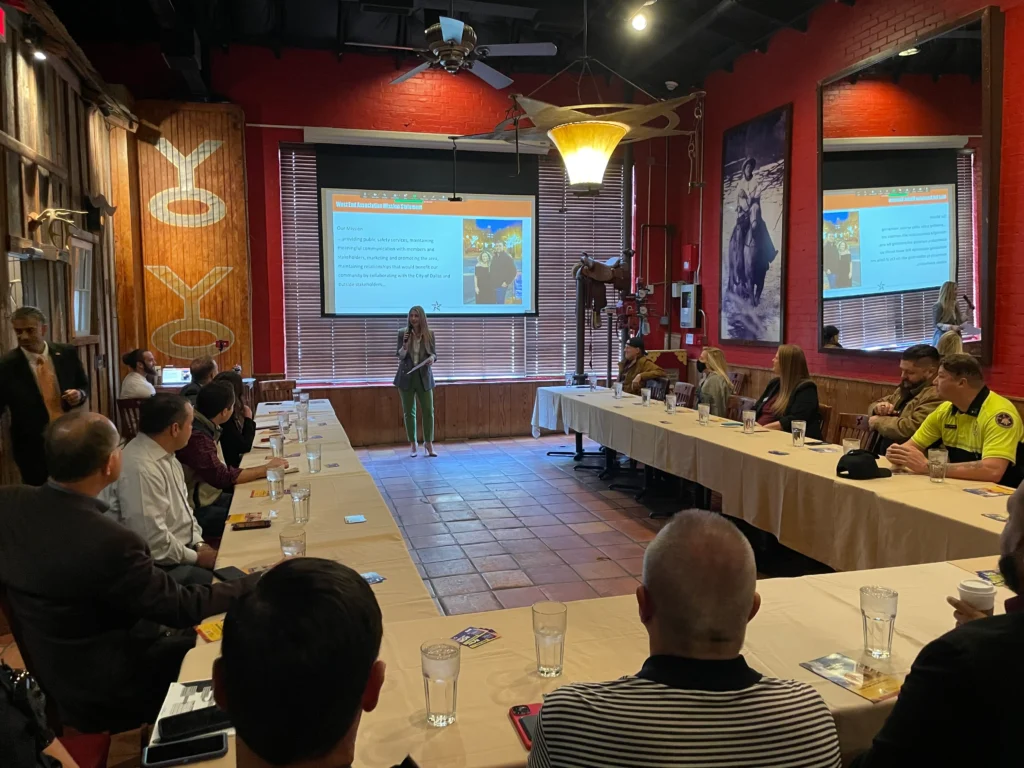
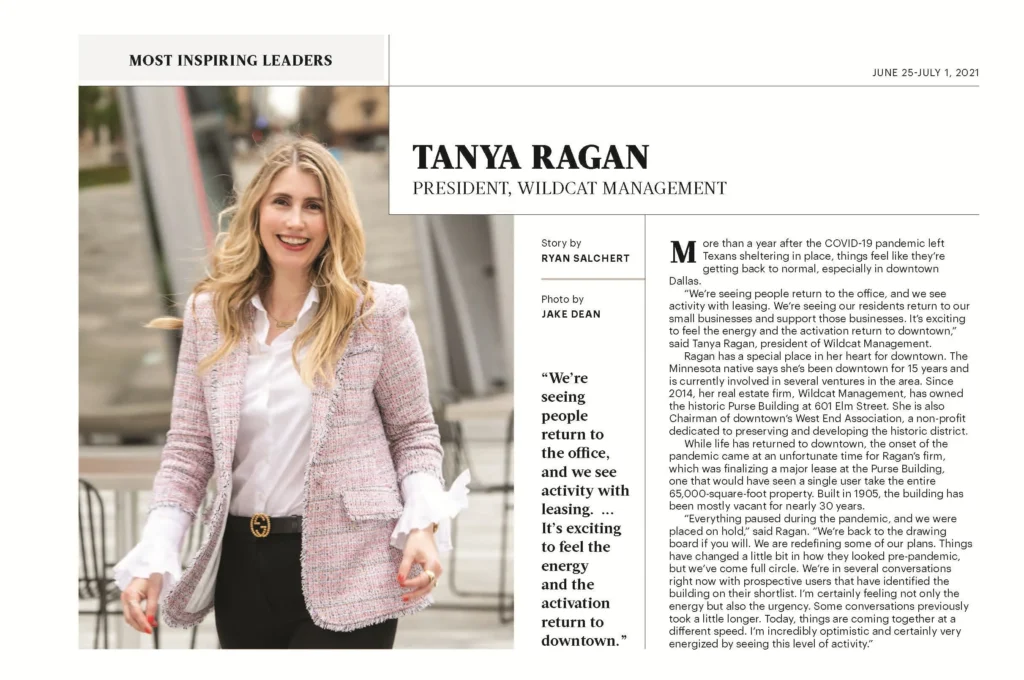
As redevelopment progressed, Tanya took on a broader leadership role. She restructured the West End Association and became chairman.
Unlike the Farmers Market, where many owners were local wholesalers and small operators, the West End was dominated by institutional and corporate ownership. Crescent, Stream, Lincoln, and other major firms controlled significant portions of the district.
Aligning these groups required a different level of coordination.
Tanya organized the owners around a shared vision and helped establish a neighborhood‑wide strategy.
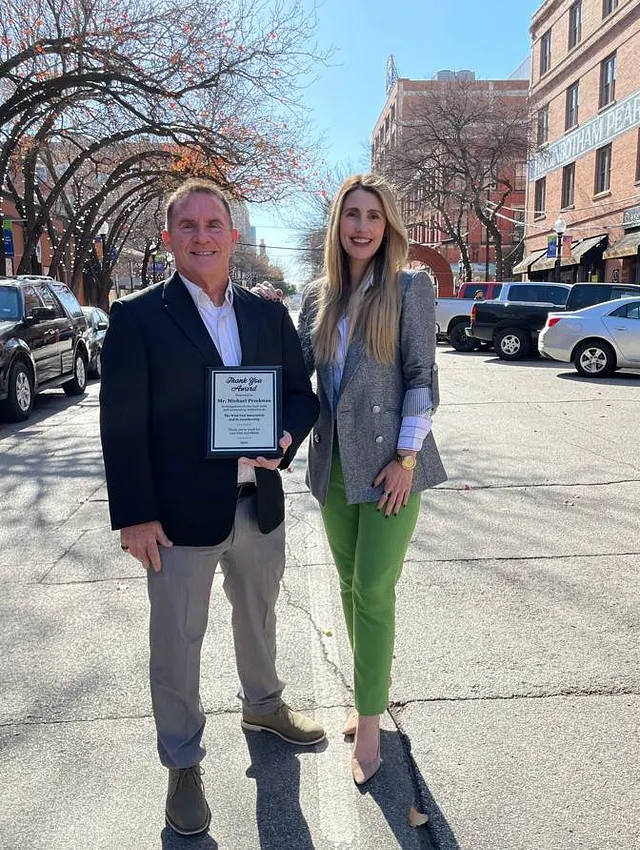
One major outcome was the creation of a dedicated public safety program funded by the property owners. To this day, the West End is the only neighborhood in downtown Dallas with its own dedicated patrol within its boundaries.
Building a Neighborhood, Not Just a District
Over the last several years, the West End has shifted from a primarily tourist‑driven district to a functioning neighborhood.
Key changes include:
- office buildings converted to residential use
- a new city park opening in the district
- more local restaurants and businesses entering the area
- increased civic activity from the adjacent government district
County buildings have been renovated and centralized, bringing in thousands of daily visitors for services such as driver’s licenses, passports, marriage licenses, and property tax matters. One county building alone added roughly 1,000 employees to the area.
The result is a district with multiple drivers of activity — tourism, government services, office users, residents, restaurants, and the nearby court system — all contributing to real pedestrian traffic and street life.
What the West End Looks Like Today
Despite the visible changes, long‑time Dallas residents often still think of the West End as the entertainment district that declined in the 1990s. Newer residents, investors, and visitors see something entirely different: a walkable neighborhood with historic character, active street life, and ongoing redevelopment.
The west side of downtown is also larger than the Farmers Market — roughly 100 acres compared to about 50 acres — stretching from Houston to Lamar and from Elm toward the interstate.
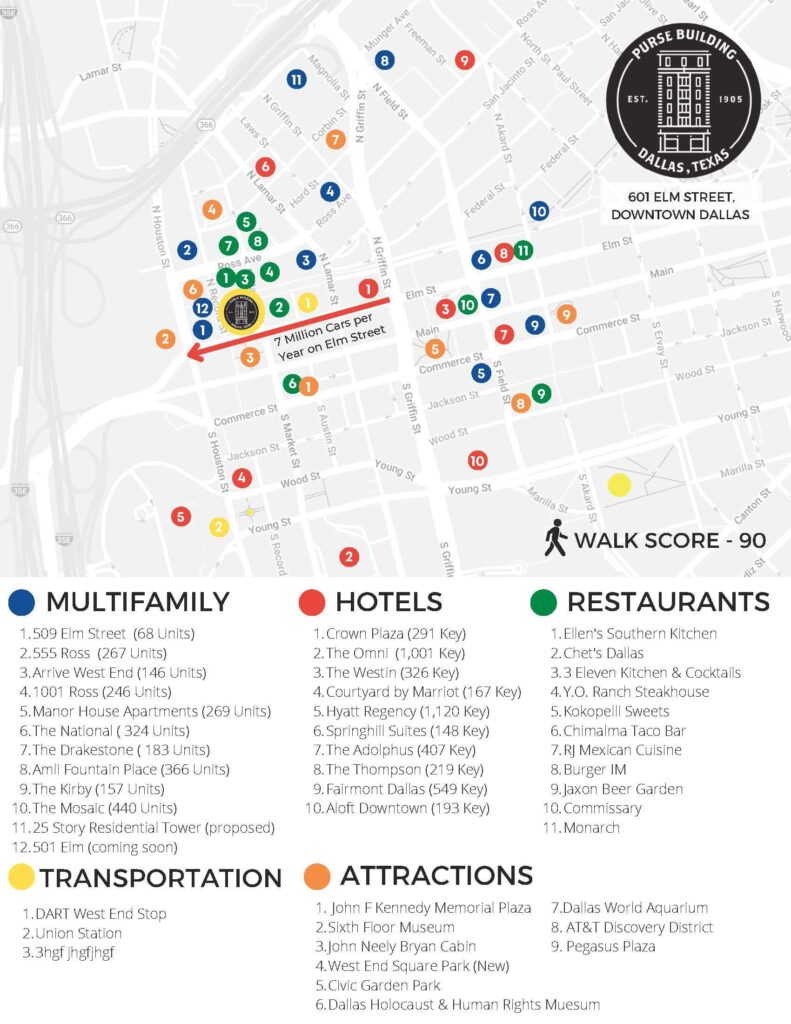
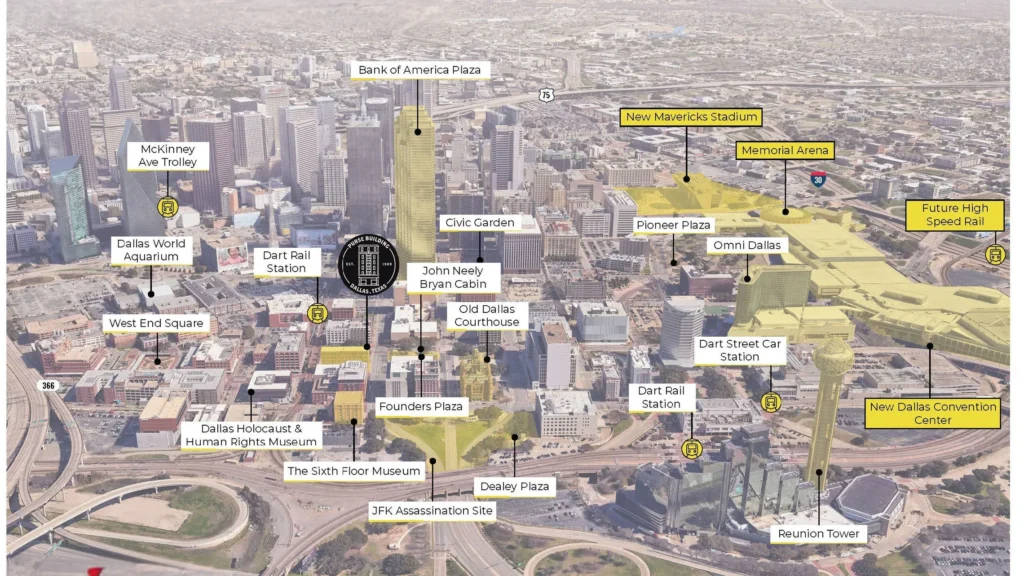
A map of the district shows how the Purse Building sits at the center of the West End’s connections to Dealey Plaza, the government district, and the surrounding amenities.
Timeline of West End Redevelopment
2013–2016 Work on the Farmers Market concludes; downtown gains 24/7 police coverage.
2016–2018 Acquisition and restoration of the Purse Building.
2018–2022 Restructuring of the West End Association; creation of the dedicated public safety program.
Today The West End functions as a mixed‑use neighborhood with tourism, residential activity, government services, and growing pedestrian traffic.
Lessons from the West End
The evolution of the West End highlights a broader pattern in downtown Dallas redevelopment:
- Early investment creates momentum.
- Historic districts require alignment among owners.
- Institutional ownership demands a different level of leadership.
- Neighborhoods grow when safety, identity, and investment move together.
- Seeing value before others do is often the catalyst for district‑scale change.
For Tanya, the West End was the next step in a progression that began in the Farmers Market. The experience she gained — working with institutional owners, navigating bureaucracy, and coordinating large organizations — prepared her for the next level of projects, including those outside downtown.
It is a story about recognizing opportunity early, putting the right pieces together, and understanding where growth is going next.