

06 Nov Why Dallas Is Pulling Financial Firms South and What That Means for CRE
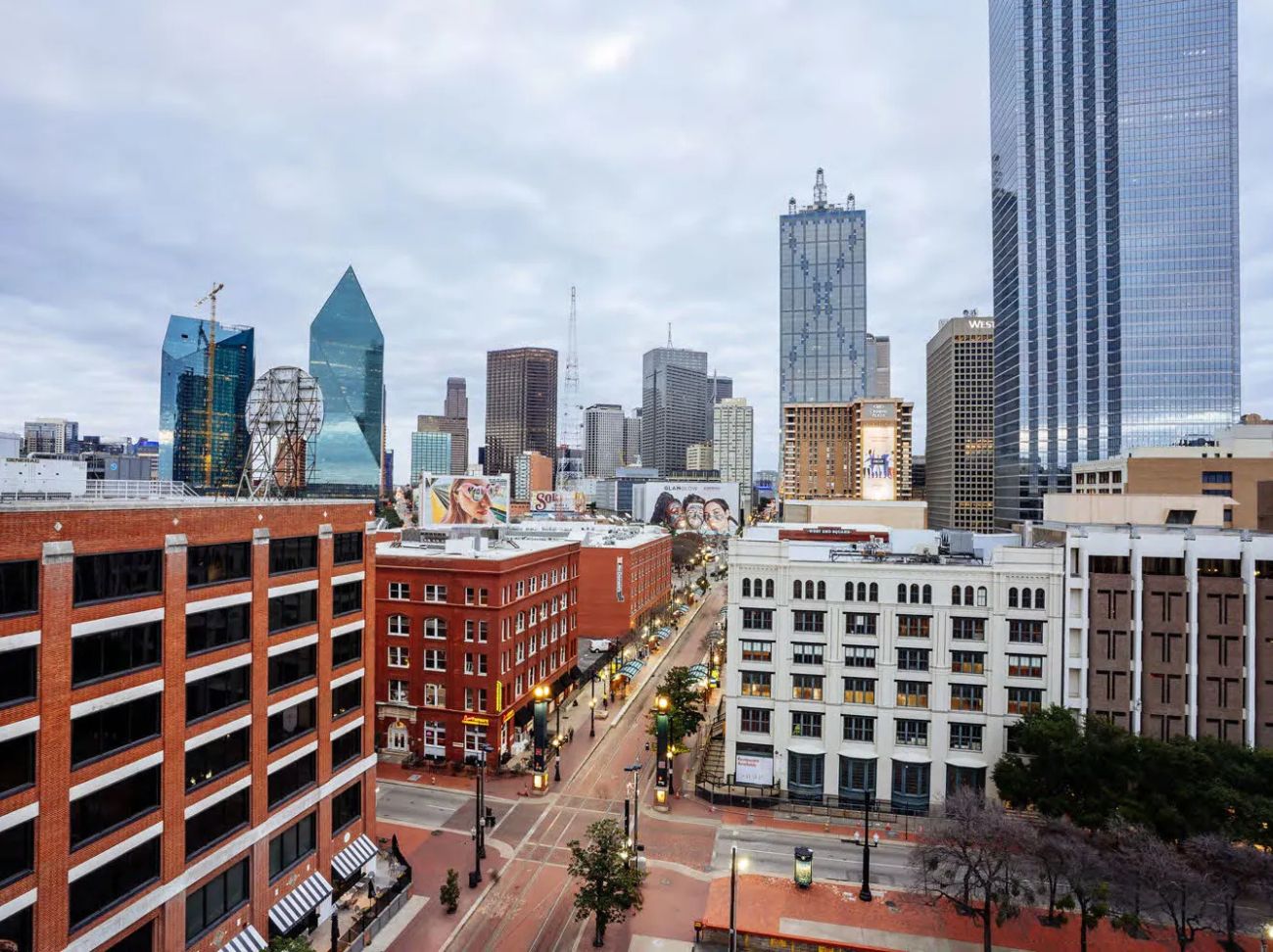
Money is moving to Dallas, and that movement is reshaping what investors look for in commercial real estate. New headquarters, major institutional campuses, and a growing cluster of market infrastructure are changing demand patterns fast. For owners and brokers who read those signals, opportunity is arriving ahead of the market.
Why Dallas, Why Now?
“Y’all Street” started as a nickname and has become a way to describe a pattern: a handful of finance firms test a regional presence, then larger campus investments and market-support operations follow. In practice that means steady payrolls and predictable daytime populations, plus new demand for restaurants, professional services, compliance teams, and specialized operations space. Those everyday shifts are what turn headlines into sustained real estate demand.
Dallas combines the practical advantages companies want — lower operating and real estate costs than many coastal markets, a deep regional talent pool, faster permitting and targeted incentives, plus central time-zone convenience and strong air and road connections.
The facts back it up: DFW led the nation in corporate headquarters relocations between 2018 and 2024, adding roughly 100 new headquarters, and the metro is home to about 21 Fortune 500 companies. Major local projects, from the Kay Bailey Hutchison Convention Center redevelopment to large campus investments, add payrolls and steady daytime traffic that create predictable demand for nearby real estate. That combination of local advantages and tangible commitments explains why local markets react differently when finance firms commit.
What Institutions Bring to a Market
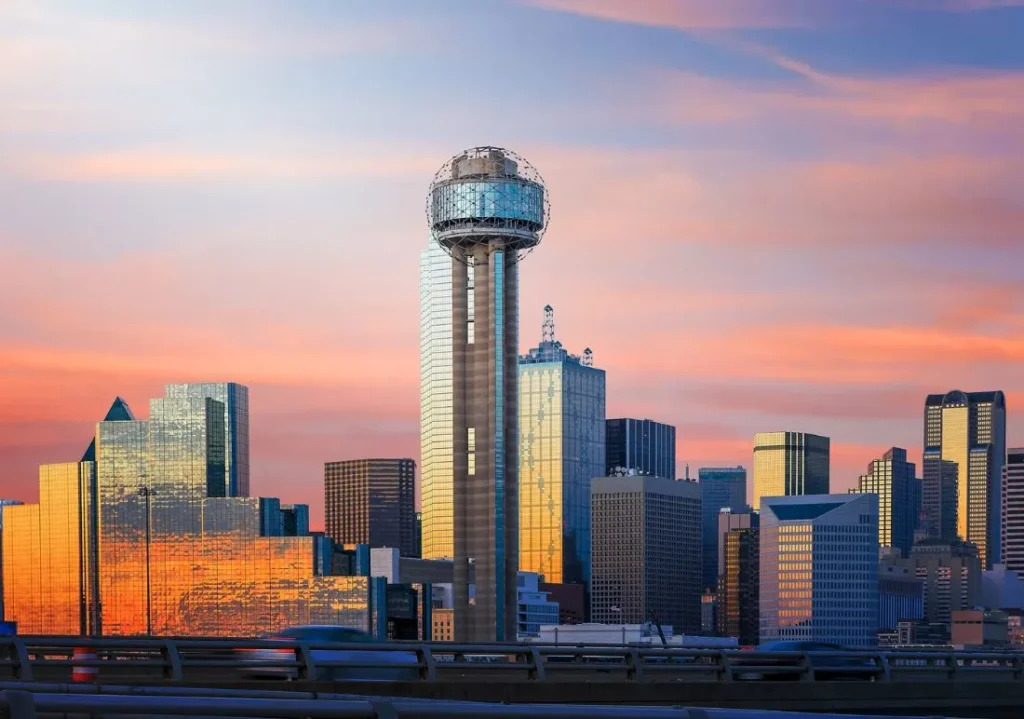
When large firms relocate, including banks, asset managers, and trading houses, they bring an ecosystem, not just square footage. Payrolls create predictable demand that spawns vendors, professional services, restaurants and extended-hour activity. Those are the everyday things that convert headlines into sustained demand for nearby office and operations space.
Add financial infrastructure to the mix, such as exchanges, trading desks and market operations, and the game changes. These businesses prize operational readiness: power redundancy, dependable HVAC, secure access, and high-capacity connectivity. They do not rent on curb appeal alone; buildings that can deliver that reliability stop being interchangeable and start commanding premium terms.
Put another way, location now has measurable effects on value. A short walk to a campus or market hub can mean faster leasing, longer commitments and a tenant mix that supports a broader workday. That shifts how buyers model returns and plan capital, and it is exactly the dynamic recent coverage is flagging.
How the Reporting Connects the Dots
National coverage makes the shift unmistakable.
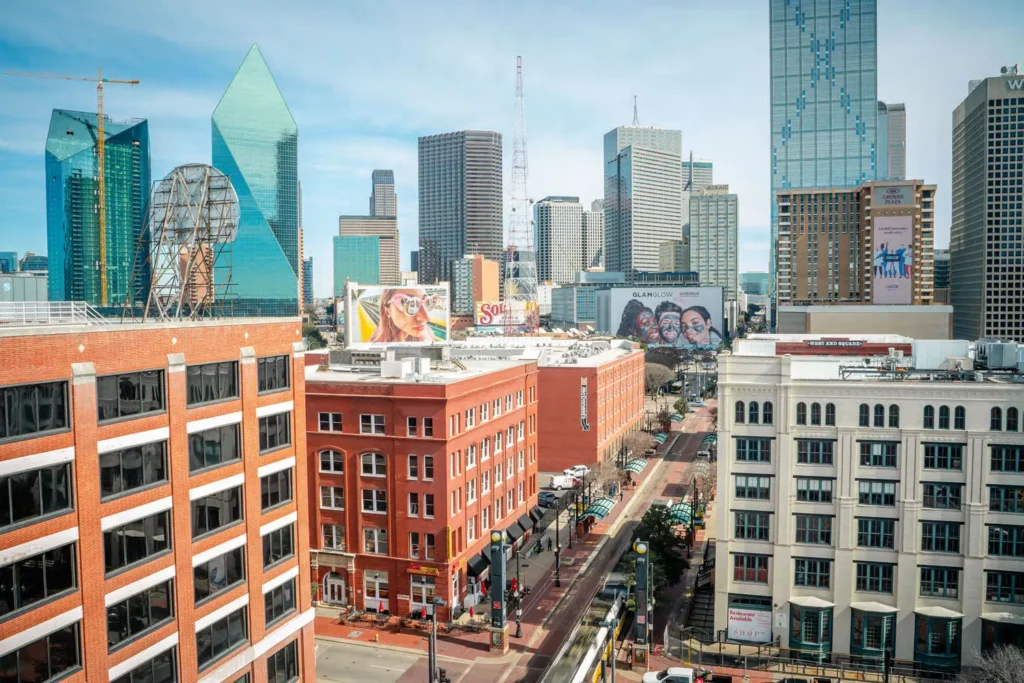
Bloomberg highlights Goldman Sachs’ $500 million Dallas campus, an 800,000-square-foot complex expected to house more than 5,000 employees with extensive workplace amenities, a level of institutional commitment that shifts long-term office demand by bringing large, concentrated payrolls to the market.
D Magazine focuses on the Texas Stock Exchange and the emergence of a regional trading hub. That development matters because an active exchange attracts market-support firms and trading operations that need specialized space and reliability, adding another layer of predictable demand near exchange-adjacent buildings.
Site Selection’s rankings show Dallas near the top for headquarters relocations. Together, these three themes (institutional capital, market infrastructure, and headquarter relocations) create momentum and a clear rationale for buyers seeking a strategic foothold in Dallas’ emerging finance corridor.
Recent industry research reinforces the trend. ULI and PwC’s Emerging Trends report again ranks Dallas-Fort Worth as the top U.S. market for real estate prospects, citing accessibility, low cost of living and sector diversification.
National coverage is echoing that view: Fox Business and other outlets are spotlighting major banks and financial firms expanding operations in Texas, underscoring that the city’s momentum is attracting large institutional tenants as well as market-support businesses.
A Local Moment: The Purse Building
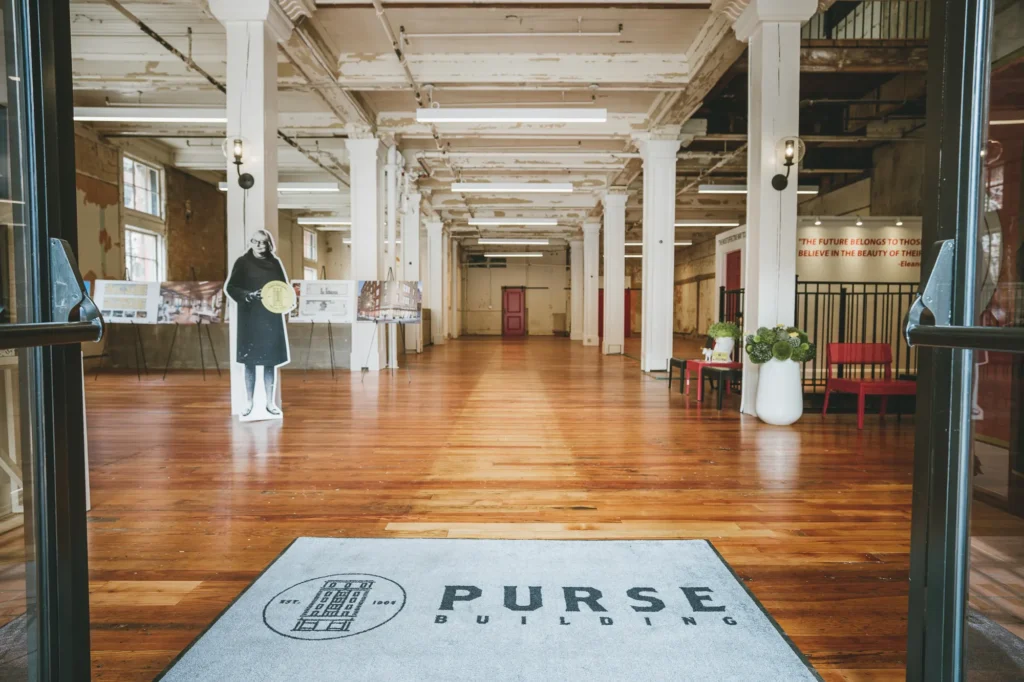
Closer to home The Real Deal calls out downtown’s “donut” problem and notes the Purse Building’s $12.5 million listing. That detail matters: it moves the discussion from abstract trends to an actual building someone can buy right now.
“Now is the moment to own into Dallas’ finance momentum. The Purse Building gives buyers a direct way to capture growing demand where it is happening.” Tanya Ragan, president, Wildcat Management
A building on the market turns trends into transactions. The Purse Building’s listing gives buyers a chance to own where this finance activity is concentrating. It is within walking distance of the Goldman Sachs site and the developing exchange activity, putting buyers in the path of growing finance-sector foot traffic and nearby operational demand.
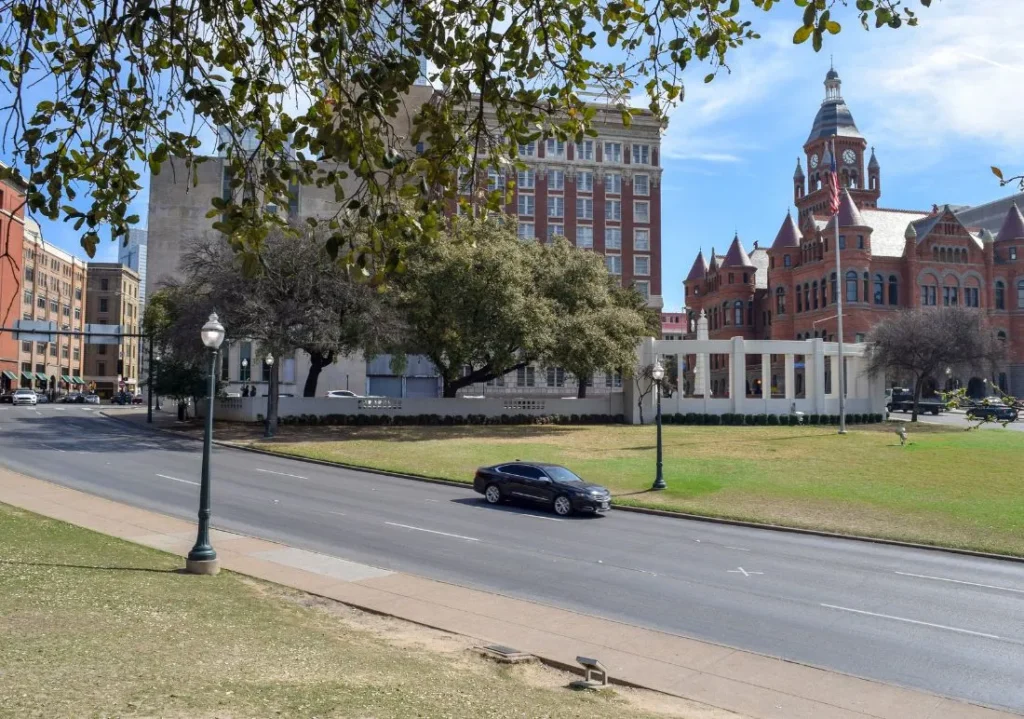
The property is also steps from Dealey Plaza, a historic downtown landmark associated with President John F. Kennedy’s 1963 assassination that attracts visitors year-round. That visitor traffic, together with recent reinvestment in hospitality and public spaces, adds steady daytime activity that complements nearby office demand.
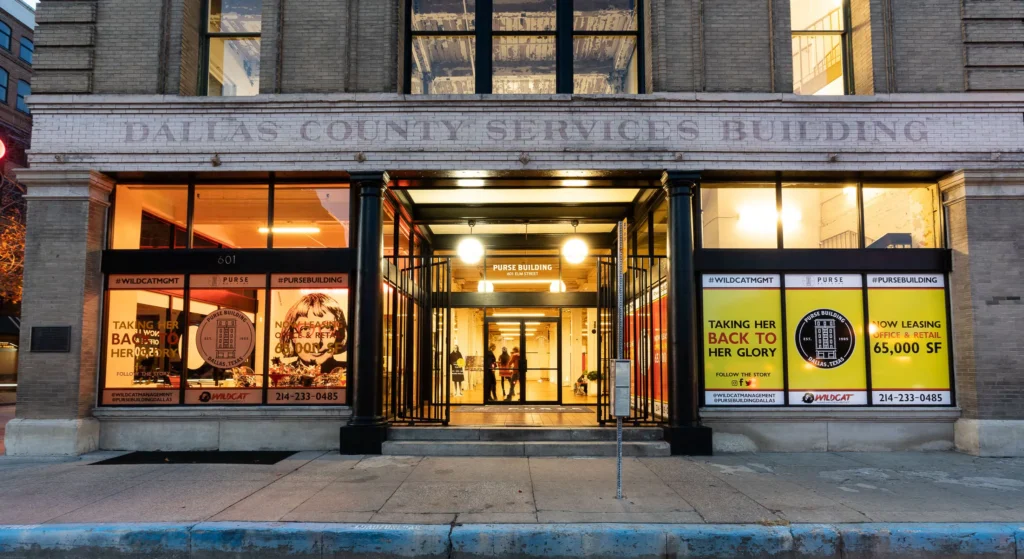
Wildcat Management is marketing the Purse Building as a concrete entry point into Dallas’ growing finance corridor. The property’s availability gives buyers a straightforward way to own into the market now, rather than chasing leases later.
Policy and the Deal Math
Local policy can tip an acquisition from marginal to attractive. Cities competing for finance jobs often offer incentives such as tax abatements, faster permitting, infrastructure upgrades and workforce support. Those programs can alter local economics and make certain acquisitions more appealing to institutional buyers.
Vacancy Becomes Opportunity
Demand is growing in Dallas. The Purse Building is available now and sits at the center of that activity. For tours, investor packets, and press requests: contact Monica Moreno, Wildcat Management, [email protected] | (214) 758–0348
Further Reading
· New York Post — “Here’s where big Wall Street firms are moving.” https://nypost.com/2025/11/03/business/heres-where-big-wall-street-firms-are-moving-as-nyc-looks-poised-to-elect-a-socialist-mayor/
· Bloomberg — “Goldman Sachs’ $500 million Texas investment takes shape in Dallas.”
https://www.bloomberg.com/news/articles/2025-08-22/goldman-s-500-million-texas-investment-takes-shape-in-dallas
· D Magazine — “Inside the battle on Y’all Street: Can the Texas Stock Exchange really challenge the NYSE-Nasdaq?”
https://www.dmagazine.com/publications/d-ceo/2025/may/inside-the-battle-on-yall-street-texas-stock-exchange-nyse-nasdaq/
· Site Selection / CultureMap — HQ relocation trends and DFW stat.
https://dallas.culturemap.com/news/innovation/corporate-headquarters-relocations-dfw/
· The Real Deal — “Downtown Dallas’s donut problem” (mentions the Purse Building).
https://therealdeal.com/magazine/november-2025/downtown-dallass-donut-problem/
· PwC — Emerging Trends in Real Estate 2026 press summary.
https://www.pwc.com/us/en/about-us/newsroom/press-releases/emerging-trends-in-real-estate-2026.html
· Fox Business — “Why major financial firms are expanding Texas presence beyond traditional Wall Street hub.”
https://www.foxbusiness.com/economy/why-major-financial-firms-expanding-texas-presence-beyond-traditional-wall-street-hub