01 / VEHICLE TRAFFIC
Tires, lifts and rolling loads
Repeated vehicle movement, jack stands, tool carts and concentrated loads affect surface wear and substrate requirements.
Commercial epoxy, resinous and concrete flooring solutions for service bays, vehicle maintenance shops, garages and aircraft hangars across Massachusetts and New England.
Auto repair shops, dealership service departments, municipal fleet garages and aircraft maintenance facilities put flooring under repeated tire traffic, equipment movement, fluid exposure and routine cleaning.
New England Floor & Wall evaluates the existing concrete, work activities and maintenance requirements before recommending a flooring system. Surface preparation, repairs, appropriate texture and chemical compatibility are central to a lasting result.
Repeated vehicle movement, jack stands, tool carts and concentrated loads affect surface wear and substrate requirements.
System selection should account for actual fluids, exposure duration and cleanup procedures rather than assume universal chemical resistance.
Wet conditions, work-zone delineation, surface texture and cleaning methods all influence a functional floor.
Concrete preparation, curing and phased bay closures should be coordinated with operating hours and equipment access.
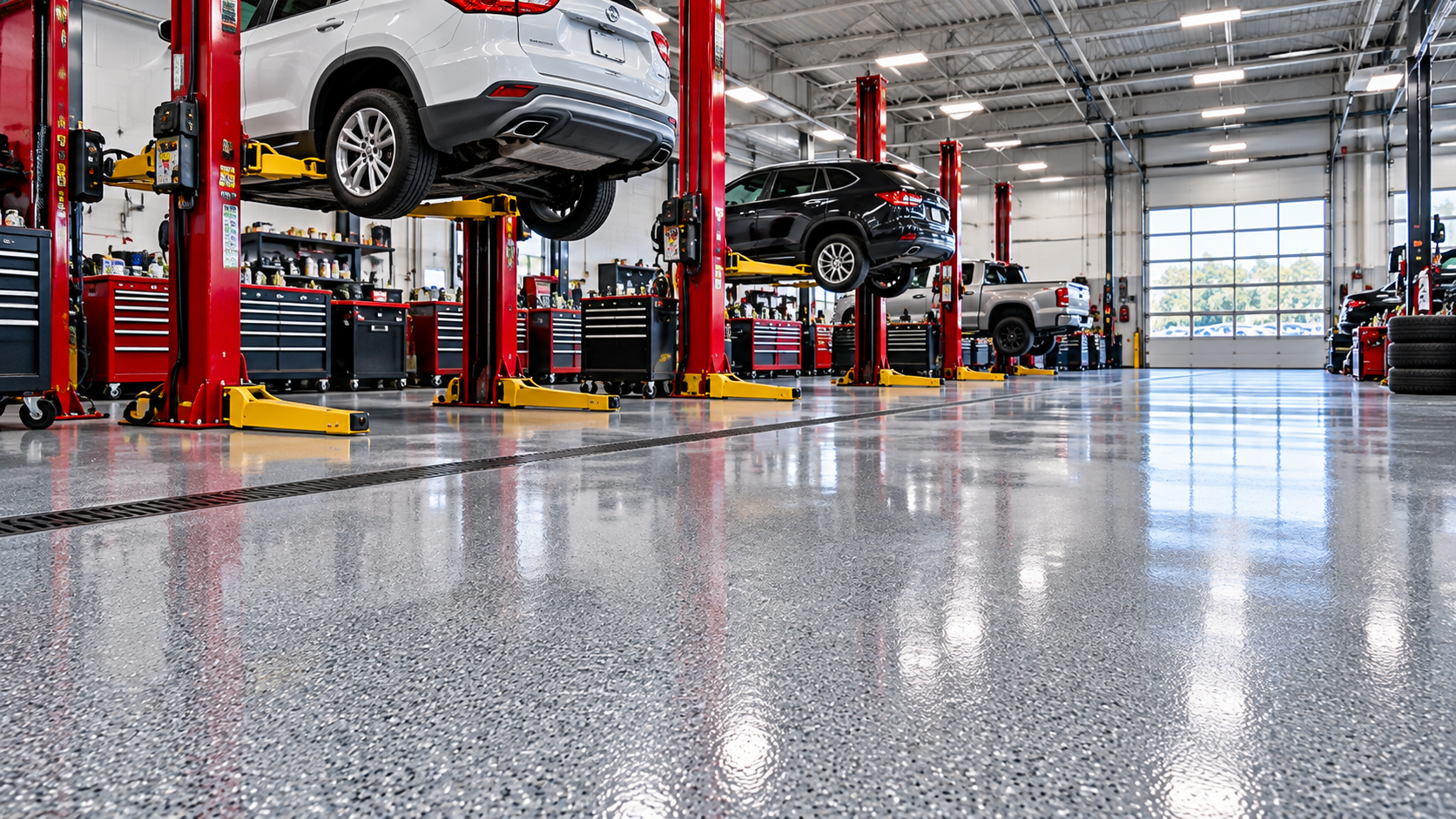
Resinous systems can provide a continuous, maintainable surface for repair bays, dealership service departments and vehicle storage. The specification should address tire traffic, chemicals, slip resistance, existing slab moisture and repair needs.
Explore epoxy & resinous flooring ↗Aircraft hangars and fleet facilities can involve large uninterrupted floor areas, rolling equipment, maintenance chemicals and strict operating requirements. Coating selection and any special electrical or fire-safety performance must follow project specifications.
Explore specialty coatings ↗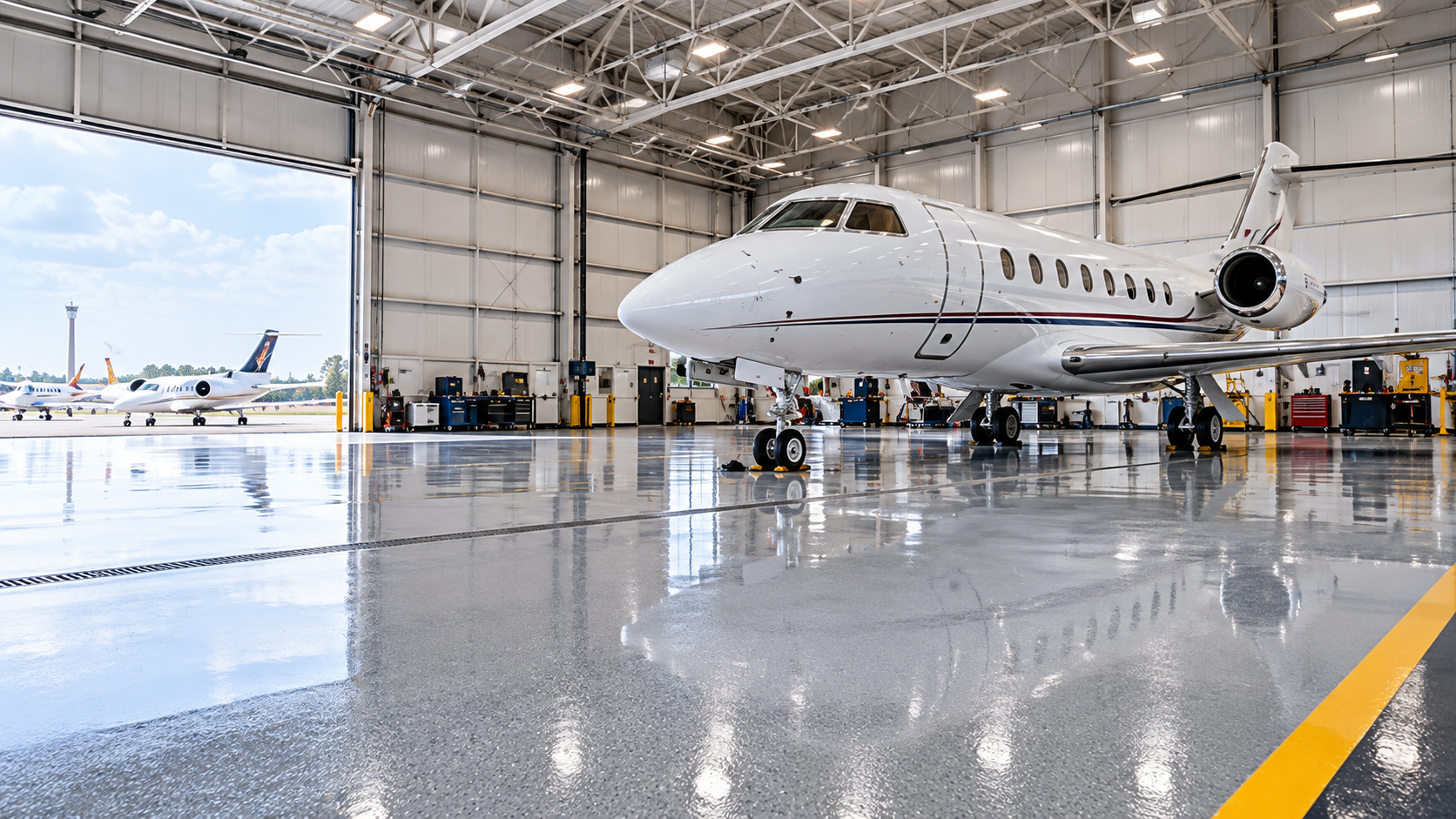
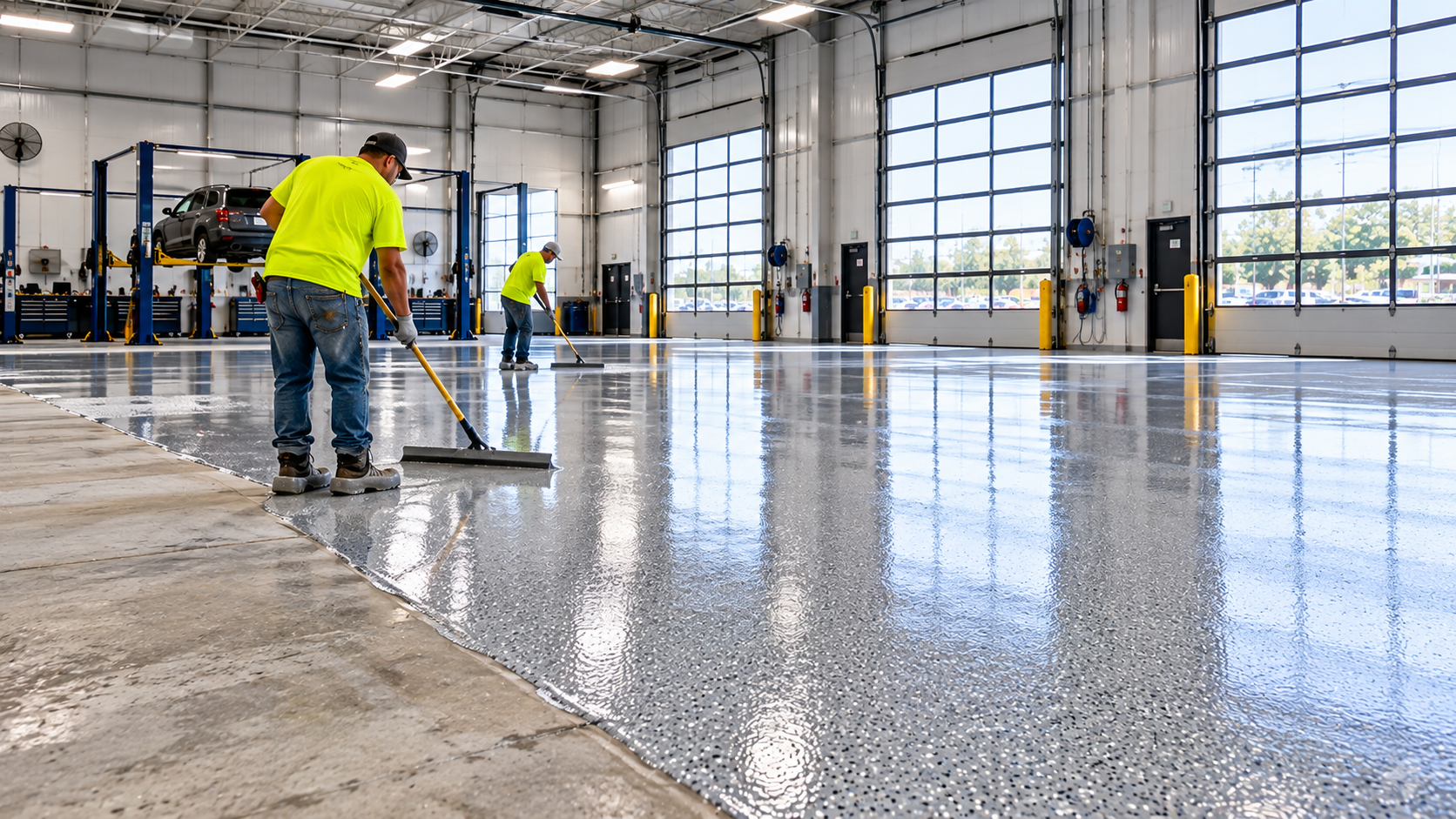
Coating performance starts with sound concrete. Cracks, contamination, old coatings, uneven surfaces and moisture must be assessed. Depending on conditions, grinding, repairs, leveling or overlays may be appropriate before finishing.
Explore concrete leveling & overlays ↗A busy auto shop and an aircraft hangar do not have identical flooring requirements. Maintenance chemicals, surface loading, traction, cleaning and installation windows should be reviewed before a system is specified.
New England Floor & Wall serves commercial and industrial facilities across Massachusetts and the wider New England region.
Explore flooring projects ↗The right floor depends on vehicle traffic, oil and fluid exposure, cleaning practices, existing concrete and desired traction. Epoxy and other resinous coatings are common options, but no single coating suits every repair bay.
Properly selected systems can accommodate vehicle traffic, but lift anchorage, point loads, tire contact, slab condition and the coating specification must be evaluated separately. Coatings do not strengthen an inadequate structural slab.
Chemical resistance varies by formulation, concentration, temperature and contact time. Identify the fluids used in the facility and confirm compatibility with the selected manufacturer's system.
Hangar floors may require durable resinous systems, abrasion resistance, appropriate traction and compatibility with fuels, hydraulic fluids and maintenance chemicals. Any aviation-specific fire, static-control or operational requirements must be established by the facility's design team.
Often, if the concrete is structurally sound. Existing coatings, contamination, moisture, cracks and surface profile should be assessed before recommending repairs or a new flooring system.
Downtime depends on preparation, repair scope, temperature, ventilation and the chosen system's cure schedule. Work can sometimes be phased so a facility retains access to other bays.
System suitability, chemical resistance and aviation-specific requirements require project-specific review.