Specialty floor coatings & waterproofing for demanding spaces.
From moisture-sensitive substrates and wet areas to high-traffic work zones, specialty systems address performance needs that ordinary floor finishes may not meet.
Start with the problem the floor needs to solve.
Not every facility needs the same surface. Some floors face frequent washdowns or chemical exposure. Others need better traction, protected transitions, a moisture-control strategy or a membrane intended to limit water migration.
Specialty coatings and waterproofing are broad categories, not a single product. New England Floor & Wall evaluates the existing concrete, exposure conditions and intended use to help identify an appropriate system and installation approach.

Different systems address different challenges.
Protective industrial coatings
Resinous coating systems can be specified for abrasion, equipment traffic, cleaning and selected chemical exposures.
- Industrial work areas and equipment zones
- Wear-resistant or cleanable finishes
- System thickness and chemistry matched to service conditions
Important: Chemical resistance is product-specific. The chemicals, concentration, temperature and contact time must be reviewed.
Waterproofing membranes & wet-area protection
Membrane systems may be appropriate where the assembly must resist water migration, including certain decks, wet areas and other specified surfaces.
- Membrane and compatible wearing-surface selection
- Detailing at drains, penetrations and wall transitions
- Movement joints and termination details
Important: A water-resistant coating is not automatically a waterproofing membrane. The full assembly must be designed for its intended exposure.
Slip-resistant & textured finishes
Selected aggregates and textures can improve traction characteristics in areas exposed to moisture, tracked-in debris or frequent movement.
- Textured broadcast systems
- Traffic lanes, ramps and work zones
- Texture selected with cleaning requirements in mind
Important: No floor is slip-proof. Traction depends on footwear, contaminants, maintenance and conditions of use.
Moisture mitigation & vapor-control systems
Excess moisture vapor in concrete can affect the adhesion and performance of some flooring materials. Certain moisture-mitigation systems are designed for use beneath compatible flooring assemblies.
- Assess slab moisture and site conditions
- Review testing and system limitations
- Coordinate mitigation with the planned finish
Important: Moisture mitigation is not the same as stopping active water intrusion or correcting drainage problems.
Seamless cove bases & transitions
Integral cove bases can extend a compatible resinous floor up the wall, reducing hard-to-clean floor-to-wall corners in selected environments.
- Food and beverage production areas
- Commercial kitchens and sanitation-sensitive spaces
- Specified transitions and perimeter details
Important: Cove geometry, substrate and seal details should match the cleaning and exposure requirements.
Specialty resurfacing & containment details
Some projects require coordinated surface preparation, repair materials, protective finishes and edge details rather than a conventional coating alone.
- Localized repairs and surface rehabilitation
- Equipment pads and designated work areas
- Protective systems evaluated for the specific exposure
Important: Secondary containment and regulated environments require project-specific engineering and material compatibility review.
Which of these does your facility need? The correct answer depends on the problem, substrate and performance specification. Not every listed approach is appropriate for every building or project.
Five questions to answer before specifying a specialty floor.
A site review should establish what the surface must withstand and how the complete flooring assembly will perform.
1. What reaches the floor?
Water, oils, cleaning agents, chemicals, abrasion and temperature changes create very different requirements. Identify products and exposure frequency.
2. What is happening in the concrete?
Existing coatings, moisture, contamination, cracks and movement can influence preparation and system suitability.
3. Where can water travel?
Waterproofing depends on drainage, slopes, penetrations, terminations, joints and adjacent assemblies, not just the visible field coating.
4. How is the area used and cleaned?
Forklifts, pedestrians, washdowns, sanitation routines and desired traction affect surface texture and material selection.
5. When must the space reopen?
Preparation, application conditions, cure schedules and return-to-service requirements should be coordinated with facility operations.
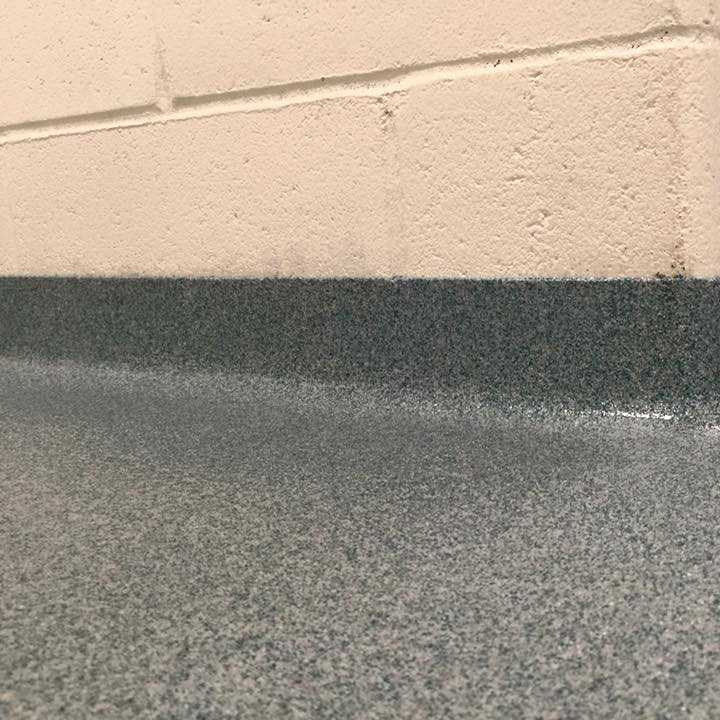
The edges, drains and transitions matter.
A specialty flooring system is more than the surface in the middle of a room. Details around walls, equipment, drains, thresholds and movement joints often determine how the assembly handles cleaning, moisture and everyday use.
Where appropriate, seamless cove bases and carefully specified transitions can support a more continuous finish. Waterproofing applications require compatible membrane, drainage and termination details.
These details should be confirmed for the actual building conditions before installation.
Explore other flooring systems ↗Specialty coatings & waterproofing FAQ
What is the difference between waterproofing and a water-resistant floor coating?
Water-resistant coatings may tolerate spills or cleaning, but waterproofing membranes are designed as part of an assembly to resist water passage under specified conditions. Membrane continuity, joints, penetrations and drainage are critical.
Can waterproofing be applied over existing concrete?
Sometimes. Concrete condition, moisture, previous coatings, cracks, movement and the intended exposure must be evaluated. Surface preparation and compatible detailing are essential.
What flooring is appropriate for areas with frequent washdowns?
Potential options include certain resinous flooring systems with suitable texture, chemical resistance and integral details. Selection depends on washdown temperature, cleaning agents, drainage, sanitation requirements and substrate conditions.
Can a coating prevent moisture vapor from coming through a slab?
Some specialized moisture-mitigation systems are designed to manage moisture vapor beneath compatible flooring, within stated limits. They do not correct active leaks, hydrostatic pressure or drainage defects.
How do you make an industrial floor more slip-resistant?
Texture and aggregate selection can change traction characteristics. The appropriate finish must balance wet or dry conditions, footwear, contaminants and cleaning needs. No coating guarantees slip prevention.
What is an integral cove base?
It is a curved or formed transition that extends a compatible resinous flooring system up the wall, creating a more continuous floor-to-wall surface in areas where cleaning and detailing matter.
Are specialty coatings resistant to chemicals?
Some systems resist specific chemicals, but resistance varies by formulation and exposure. Provide the chemical names, concentrations, temperatures and expected contact times for proper evaluation.
Commercial and industrial flooring services in Massachusetts and across New England. Product selection and project scope are confirmed after evaluation.