
Food facility flooring built for cleaning, production and daily demands.
Food and beverage operations require flooring evaluated for sanitation, moisture, equipment traffic and the realities of production.
The right floor supports the way a facility cleans and operates.
Food processing and beverage facilities can expose floors to washdowns, moisture, cleaning agents, equipment traffic and temperature changes. Requirements vary between production, packaging and storage areas.
New England Floor & Wall evaluates the existing substrate, cleaning procedures, drainage and maintenance requirements to help facilities choose suitable resinous coatings, polished concrete or surface preparation solutions.
Four conditions that influence food facility flooring
Washdown and sanitation
Cleaning chemicals, water temperature and washdown frequency help determine the required flooring chemistry and surface finish.
Wet areas, drains and transitions
Drainage, floor slopes, damaged joints and wall-to-floor transitions can affect cleanability and long-term performance.
Spills, oils and thermal changes
Food acids, oils, cleaning products and temperature swings create different exposure conditions across production areas.
Traction and installation timing
Surface texture must balance traction and cleaning. Installation and curing must be coordinated with production schedules.
Flooring systems for food & beverage facilities

Urethane flooring for demanding environments
Selected urethane flooring systems may be appropriate for washdown areas and demanding cleaning conditions. Formulation, temperature exposure, thickness and surface texture must be evaluated.
Explore urethane flooring ↗Epoxy and other resinous coatings
Resinous coatings can provide continuous, cleanable surfaces for selected processing, packaging and support areas. Exposure to cleaning agents, moisture and traffic guides product selection.
Explore epoxy flooring ↗
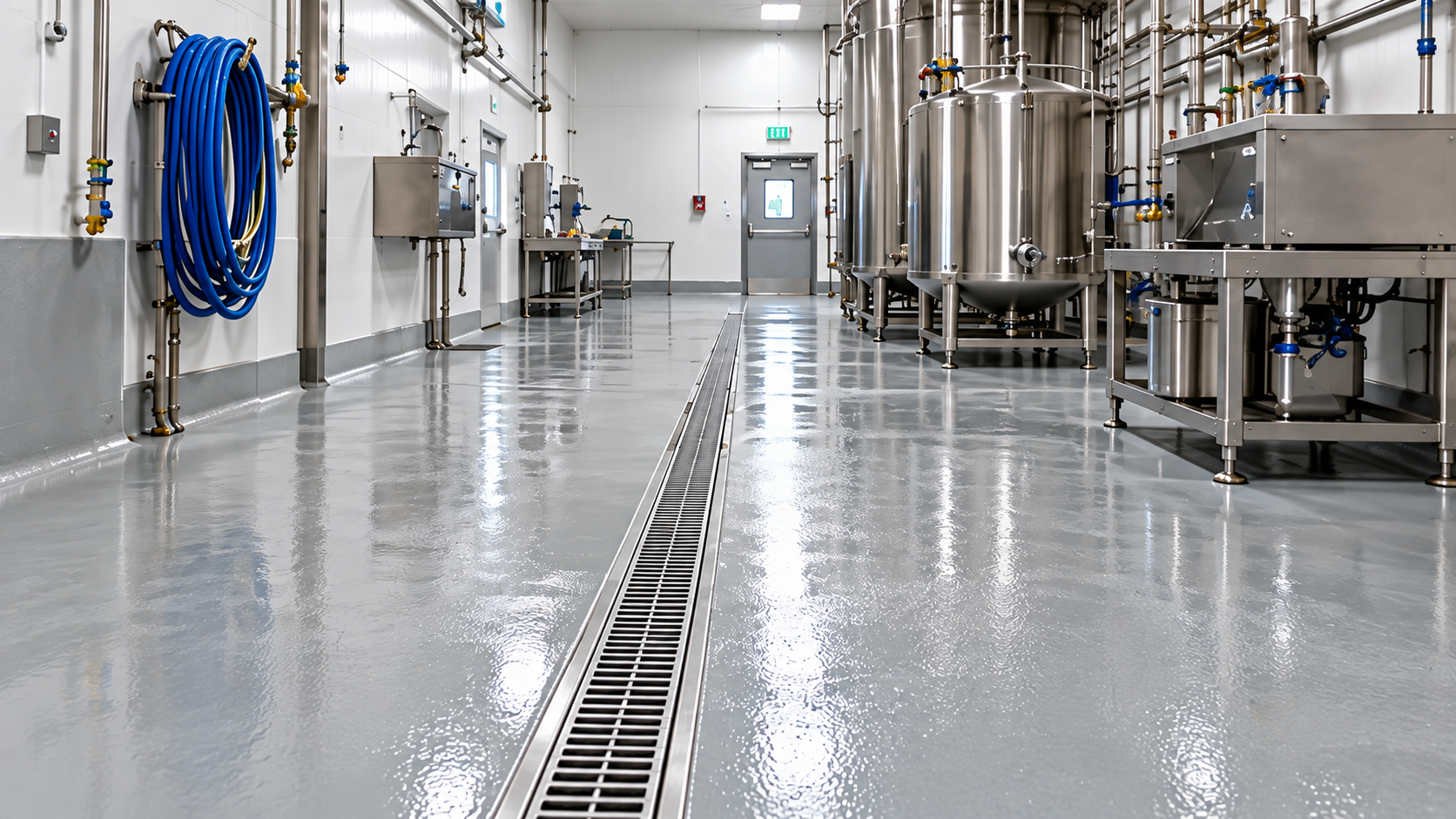
Concrete preparation, drains and cove bases
The slab, drain connections, floor slopes and wall transitions are critical parts of a flooring plan. Repairs, resurfacing and integral cove bases may be appropriate.
Explore leveling & concrete overlays ↗Food facility floors in working environments.
Food and beverage facilities have different sanitation, temperature and traffic requirements. These conditions, rather than appearance alone, should guide flooring selection.
For examples of completed flooring work, explore New England Floor & Wall's documented projects.
View flooring success stories ↗
Food & beverage flooring FAQ
What flooring is suitable for food processing facilities?
The right flooring depends on equipment loads, wheel materials, turning frequency, slab condition and cleaning needs. Epoxy or other resinous systems and suitable polished concrete surfaces are among the options worth evaluating.
Is urethane or epoxy better for food production?
Both can be suitable in different circumstances. Epoxy and other resinous coatings uses the existing slab as the finished surface, while epoxy creates a separate resinous finish. Wear patterns, exposure, maintenance and substrate condition guide the choice.
Can flooring installation be phased around production?
Some work can be phased to maintain access to other areas, but preparation, dust control, curing and equipment routes must be planned. A project-specific schedule is necessary.
How are floor drains and wall-to-floor transitions handled?
Often, but the repair approach depends on whether the joint is designed to move, the damage mechanism and the traffic it carries. Movement joints require appropriate detailing rather than simply being covered.
Can food facility flooring be made slip-resistant?
Return-to-service times vary by system, temperature, humidity, thickness and traffic requirements. Foot traffic may be permitted before heavy equipment, so the manufacturer's guidance and site conditions should control scheduling.
How do cleaning chemicals affect floor selection?
Suitable surface selection, sound concrete, correctly treated joints and regular maintenance all matter. Concentrated wear areas should be evaluated based on actual equipment and wheel loading.
Commercial and industrial warehouse flooring services in Massachusetts and across New England.