Commercial & industrial epoxy flooring built for everyday demands.
Seamless resinous flooring solutions for New England facilities, planned around traffic, substrate conditions, cleaning routines and long-term use.
More than a coating. A flooring system matched to the space.
Commercial epoxy and resinous flooring can provide a continuous, cleanable surface for a range of working environments. The right system depends on how the floor will be used, the condition of the existing concrete and the performance the facility needs.
New England Floor & Wall evaluates the substrate, surface preparation and operating conditions before recommending an installation approach.

Applications for epoxy & resinous flooring
Manufacturing & production
Flooring selected for equipment, foot traffic, abrasion and facility cleaning requirements.
Warehouses & distribution
Resinous surfaces and floor markings considered around vehicle routes and daily operations.
Commercial & institutional
Seamless finish options where appearance, cleaning and surface continuity matter.
What determines the right epoxy flooring system?
A successful installation starts with the concrete and the way the facility operates. Product chemistry, thickness, texture and preparation should be selected for the actual conditions, not from a one-size-fits-all specification.
Concrete condition
Existing coatings, cracks, contamination, moisture and surface profile can affect preparation and adhesion.
Traffic & exposure
Foot traffic, wheeled equipment, cleaning agents, spills and slip-resistance needs shape system selection.
Schedule & access
Preparation, installation and return-to-service timing should be coordinated with facility operations.
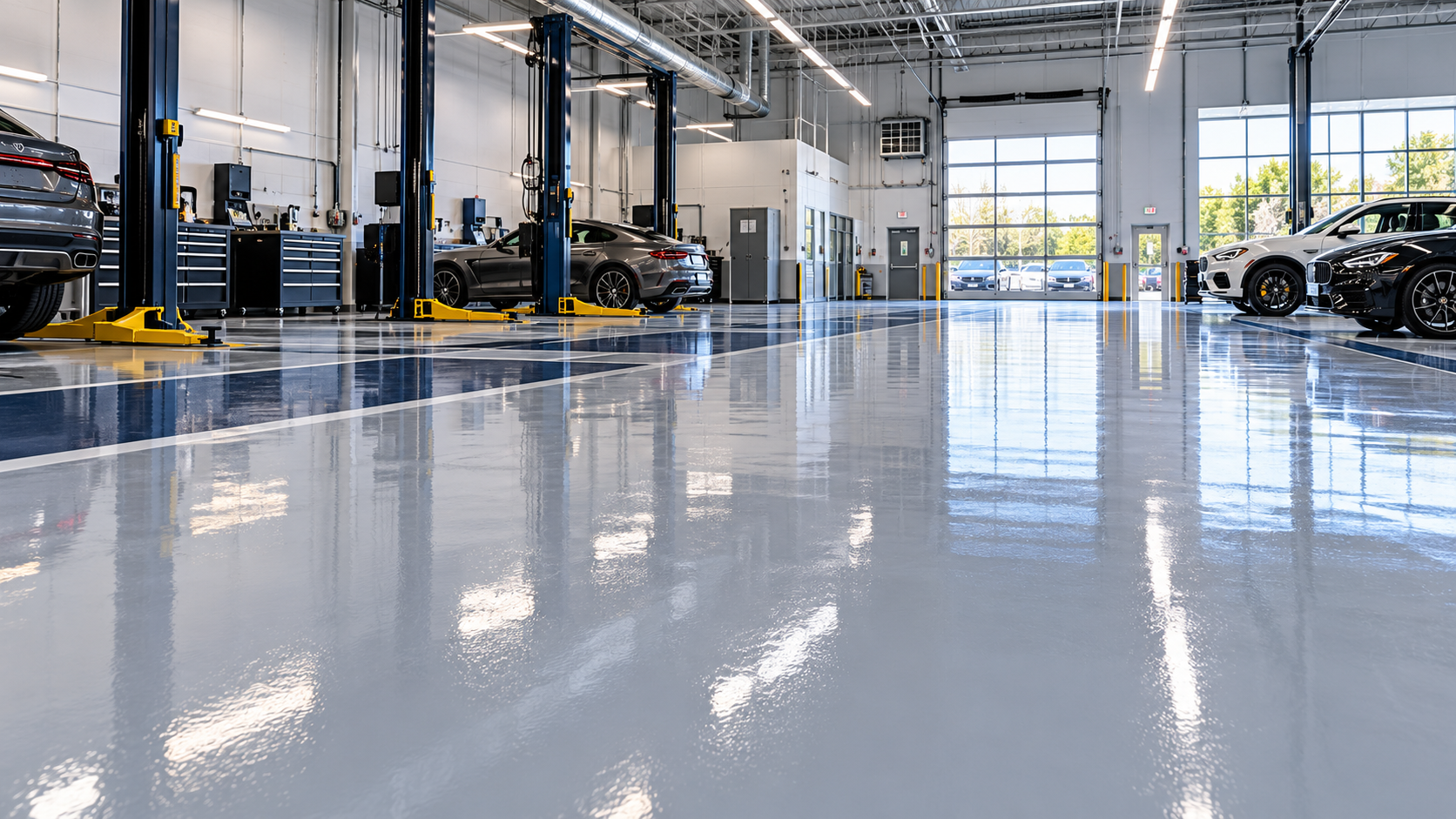
Appearance and performance can work together.
Depending on the facility, epoxy and resinous systems may incorporate solid colors, decorative aggregates, surface texture or designated markings. Decorative flake and quartz systems offer additional finish options.
Not every finish is suitable for every exposure. We recommend evaluating the required performance before selecting appearance.
See decorative and specialty flooring options ↗Epoxy flooring FAQ
How long does commercial epoxy flooring last?
Service life depends on system selection, preparation, traffic, exposure and maintenance. A heavily used industrial floor can have very different requirements from a lightly trafficked commercial space.
Can epoxy flooring be installed over existing concrete?
Often, yes, after evaluating the slab. Moisture, contamination, cracking, prior coatings and surface profile may require repairs or preparation before a new resinous system can be installed.
How long does epoxy flooring take to cure?
Installation and return-to-service times depend on the product, number of layers, temperature, humidity and site conditions. Foot traffic, equipment traffic and full chemical exposure may have different readiness times.
Is epoxy flooring slippery when wet?
Slip resistance varies with the finish, surface texture, contaminants and cleaning practices. Texture or aggregates may be incorporated where appropriate, but the system should be selected for the facility's actual conditions.
What is the difference between epoxy and urethane flooring?
Both are resinous flooring families, but their performance characteristics vary by formulation. Urethane systems may be considered for certain thermal, cleaning or chemical conditions. The best option depends on the specific operating environment.
Serving commercial and industrial facilities across Massachusetts and the wider New England region.