Urethane flooring systems for demanding commercial and industrial spaces.
Durable urethane flooring options for facilities where cleaning procedures, exposure, traffic and operational schedules shape the floor specification.
Built around the conditions your floor faces.
Urethane flooring is a family of resinous systems used in demanding commercial and industrial environments. Depending on the formulation, it can be considered where cleaning routines, abrasion, moisture or changes in temperature create particular performance requirements.
Selecting the right system requires a close look at the existing slab, anticipated exposure, installation conditions and the facility's return-to-service requirements.
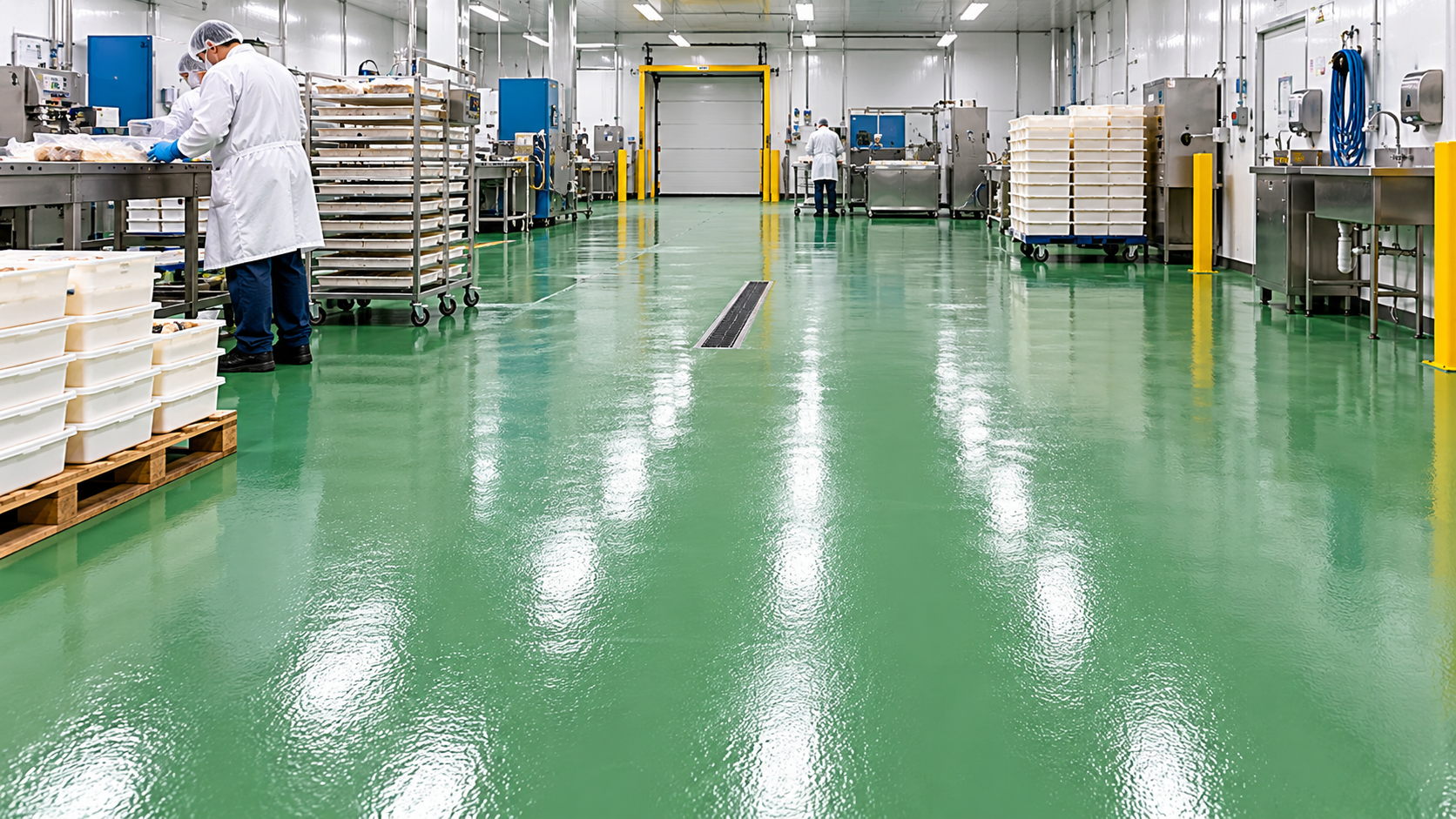
Where urethane flooring may be appropriate
Manufacturing & production
Evaluate traffic, process demands, cleaning and exposure before specifying a urethane system.
Warehouses & distribution
Consider surface texture, equipment traffic and routine cleaning needs.
Commercial & institutional
Seamless options may suit facilities where cleaning and durable surface transitions matter.
What should guide urethane system selection?
Urethane formulations are not interchangeable. System thickness, surface texture, moisture conditions and exposure requirements should be reviewed with the substrate and facility operations in mind.
Concrete condition
Existing coatings, cracks, contamination, moisture and surface profile can affect preparation and adhesion.
Traffic & exposure
Foot traffic, wheeled equipment, cleaning agents, spills and slip-resistance needs shape system selection.
Schedule & access
Preparation, installation and return-to-service timing should be coordinated with facility operations.
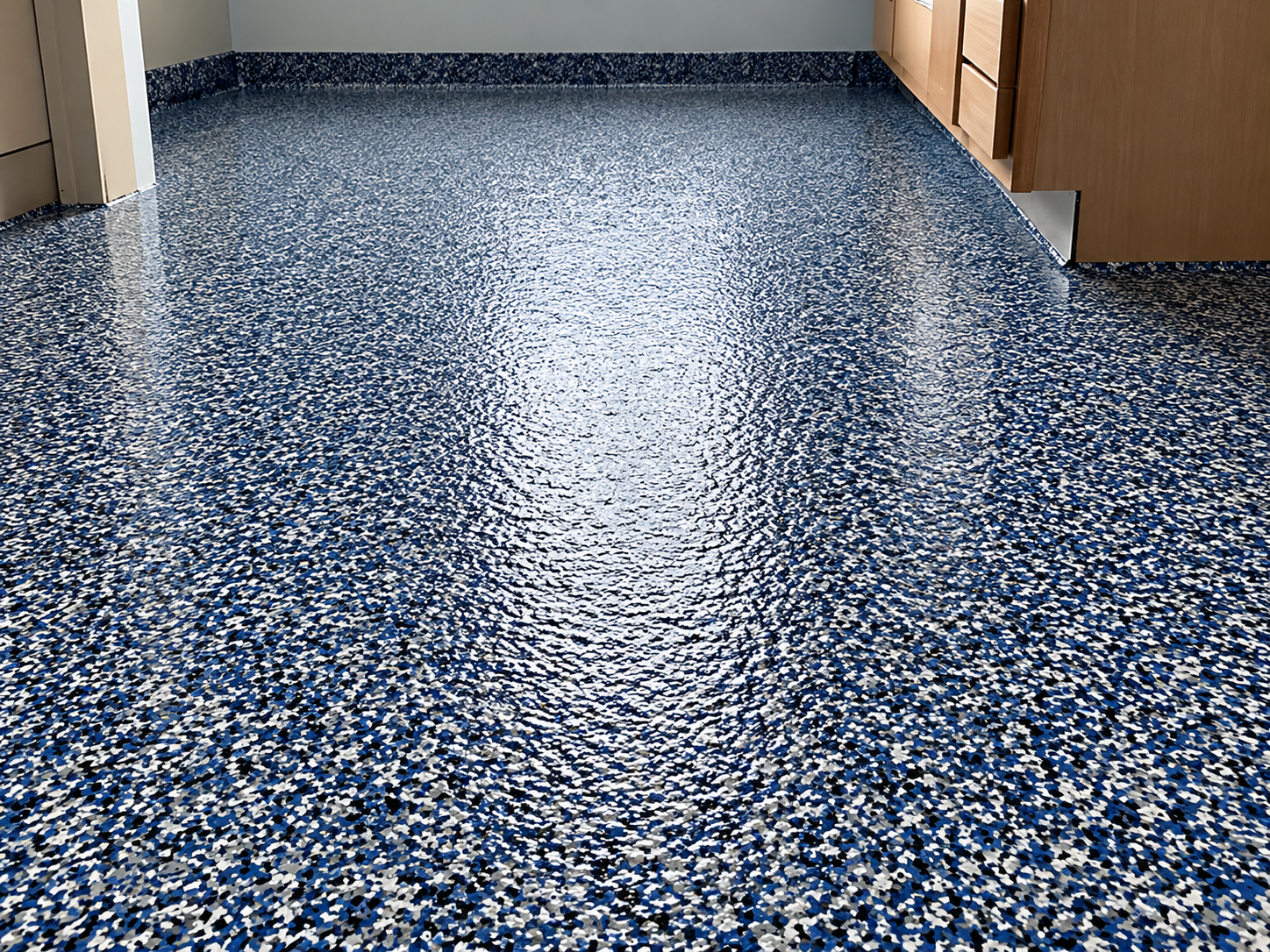
A seamless finish designed for the facility.
Depending on the facility, urethane systems may incorporate solid colors, decorative aggregates, surface texture or designated markings. Decorative flake and quartz systems offer additional finish options.
Different urethane technologies offer different properties. Confirm the appropriate formulation and installation requirements for each application.
Compare other flooring systems ↗Urethane flooring FAQ
What is urethane flooring used for?
Urethane-based resinous flooring may be considered for production, processing, institutional and other commercial spaces. The right formulation depends on traffic, cleaning procedures, exposure and substrate conditions.
What is the difference between urethane and epoxy flooring?
Epoxy and urethane are families of resinous flooring materials. Performance varies significantly by product and system design. Some urethane systems may be appropriate for specific temperature or cleaning conditions, while epoxy systems may be preferred for other applications.
Can urethane flooring be installed over existing concrete?
Often, but the slab needs evaluation. Moisture, existing coatings, contamination, cracks and surface preparation can affect whether an installation is suitable.
Is urethane flooring suitable for food processing areas?
Certain urethane systems are used in food and beverage facilities, but suitability depends on the specific system, cleaning chemicals, thermal exposure, drainage and sanitation requirements.
How long does a urethane floor take to install?
Timing depends on the system, floor area, substrate repairs, environmental conditions and cure requirements. Return-to-service expectations should be discussed before work begins.
Serving commercial and industrial facilities in Massachusetts and across New England.