
Polished concrete flooring for commercial & industrial facilities.
Make the most of your existing concrete with a refined, durable surface selected around the facility's traffic, appearance and maintenance requirements.
A finished floor built from the concrete you already have.
Concrete polishing uses mechanical grinding and progressively finer abrasives to refine the surface of a concrete slab. Depending on the slab and project specification, the process may include densification and protective treatments.
The resulting appearance depends on the original concrete, aggregate exposure, repairs and selected finish. New England Floor & Wall evaluates the existing surface before recommending a polishing approach.
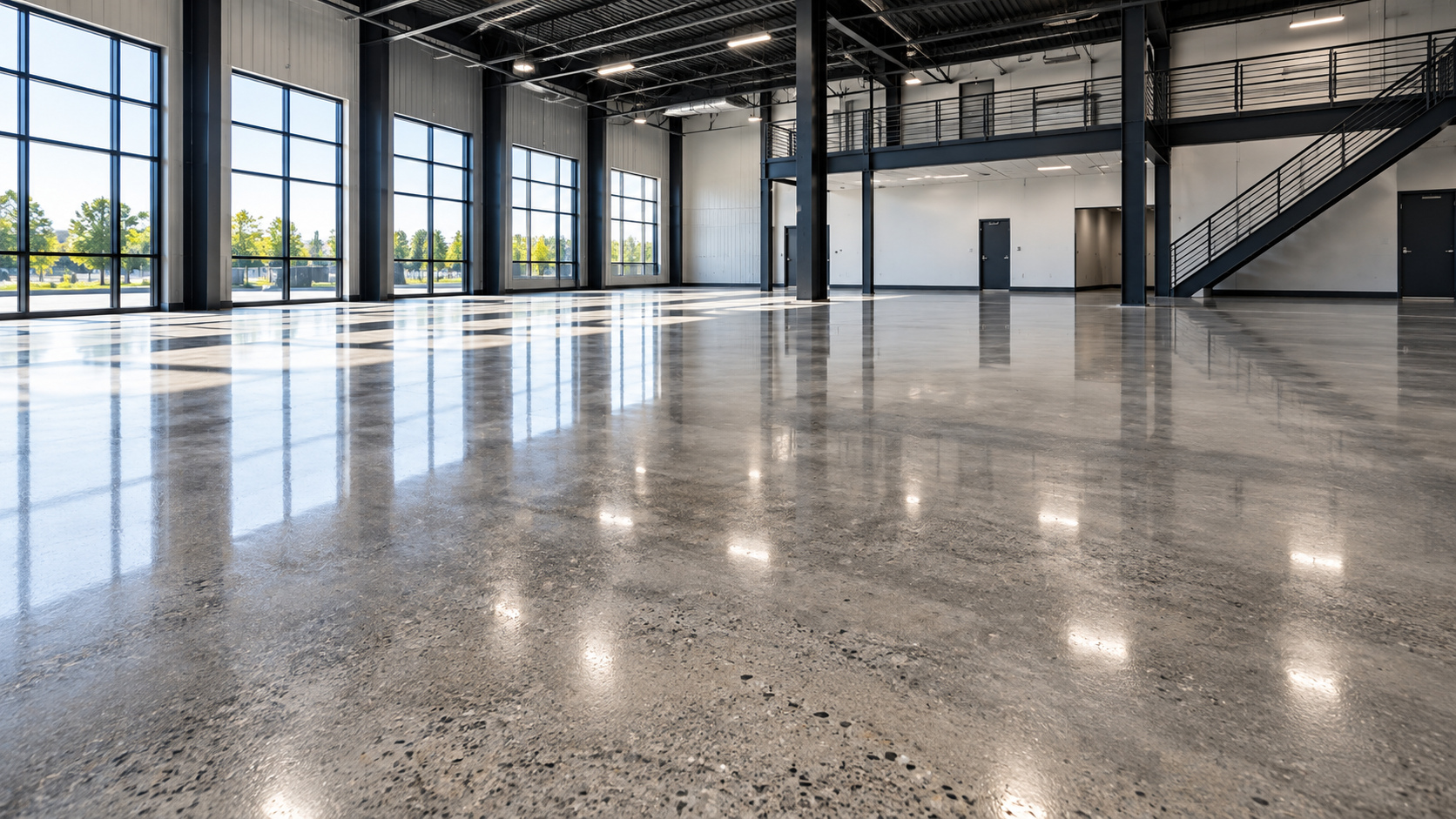
Where polished concrete makes sense
Warehouses & distribution
A practical finish for suitable concrete slabs where traffic, dust control and maintenance are important considerations.
Retail & commercial spaces
Concrete floors with a clean, contemporary appearance and finish options matched to the desired visual character.
Industrial & institutional
Existing concrete surfaces assessed for their condition, service demands and suitability for a polished finish.
What determines the finished result?
Polishing reveals the character of the slab. Concrete age, composition, repairs, cracks and previous treatments all influence what can be achieved. We recommend setting realistic expectations after evaluating the floor.
Evaluate the slab
Assess cracks, surface damage, previous coatings, flatness and any contamination that could affect the process.
Choose the appearance
Discuss aggregate exposure, sheen and the degree of variation expected in the existing concrete.
Plan for use & upkeep
Consider traffic, cleaning methods, slip-resistance needs and access during grinding and polishing.
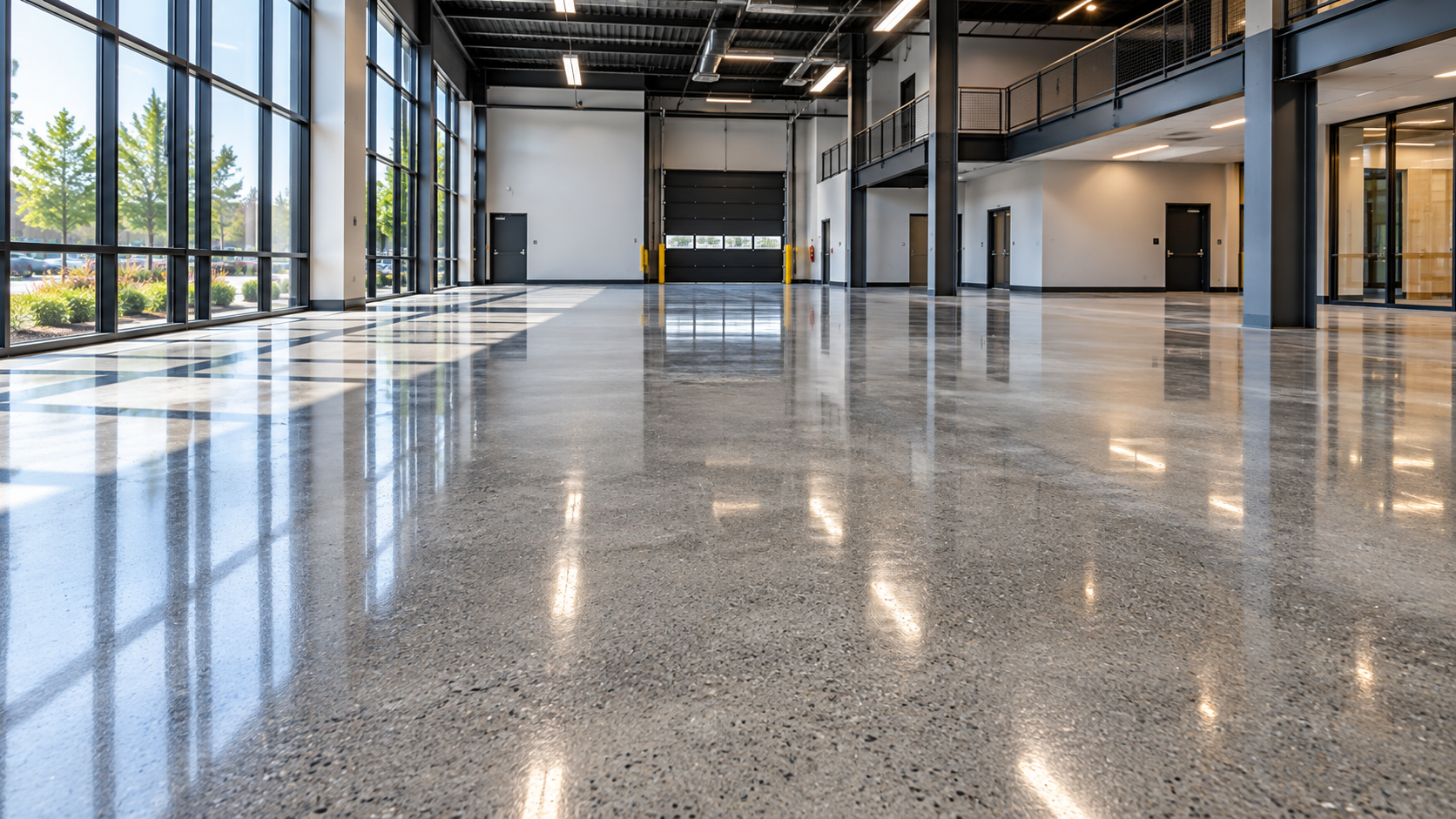
Natural variation is part of the finished floor.
Unlike a decorative coating that covers the substrate, polished concrete works with the slab itself. Aggregate patterns, patching and color variations may remain visible and contribute to the finished appearance.
Maintenance typically involves suitable dust removal and cleaning procedures. Spills and chemicals should be addressed promptly, and expectations should be based on the selected finish and operating conditions.
Explore other commercial flooring options ↗Polished concrete flooring FAQ
Is polished concrete suitable for commercial and industrial floors?
It can be a practical option where the concrete slab is suitable and the finish meets the facility's traffic, appearance, cleaning and exposure requirements.
How is polished concrete different from epoxy flooring?
Polished concrete mechanically refines the existing slab, while epoxy flooring applies a resinous system over a prepared substrate. The two approaches offer different appearance, maintenance and performance characteristics.
Can an old concrete floor be polished?
Sometimes. Existing coatings, repairs, cracks, contamination and slab quality should be assessed before deciding whether polishing is appropriate.
Is polished concrete slippery?
Slip resistance depends on the finish, footwear, contaminants and conditions of use. Wet or contaminated surfaces require particular attention when selecting and maintaining any flooring system.
How do you maintain polished concrete floors?
Routine dust removal and cleaning with products appropriate for polished concrete are important. Maintenance frequency depends on traffic, spills and the facility's operations.
Serving commercial and industrial facilities in Massachusetts and throughout New England.