Industrial flooring that works as hard as your facility.
Manufacturing floors face equipment loads, daily traffic, maintenance demands and operational schedules. The right system starts with understanding the work happening above it.
Every operation puts different demands on its floors.
A floor in a fabrication shop does not face the same conditions as one in an assembly plant, packaging facility or production warehouse. Forklifts, rolling loads, process spills, cleaning methods and downtime all affect the specification.
New England Floor & Wall works with commercial and industrial facilities to evaluate concrete conditions and identify flooring systems suited to how the space operates.
What industrial floors have to handle
Forklifts, carts & equipment
Repeated traffic and concentrated loads can wear surfaces, stress joints and damage poorly matched flooring systems.
Oils, spills & cleaning agents
Industrial processes may expose floors to chemicals, lubricants or frequent cleaning. Resistance depends on the specific materials and contact conditions.
Existing concrete conditions
Cracks, moisture, contamination and old coatings influence preparation, adhesion and the range of practical flooring options.
Downtime & return to service
Installation phases, cure schedules and access routes must be coordinated with production and maintenance requirements.
Flooring options worth evaluating

Epoxy & resinous flooring
Seamless resinous systems can provide durable, cleanable finishes in manufacturing spaces. Thickness, texture and chemical resistance should be matched to traffic and process exposure.
Explore epoxy & resinous flooring ↗Urethane & protective coatings
Where particular cleaning practices, moisture conditions or exposure requirements are present, certain urethane and specialty systems may be considered. Product selection should reflect the facility's actual conditions.
Explore urethane flooring ↗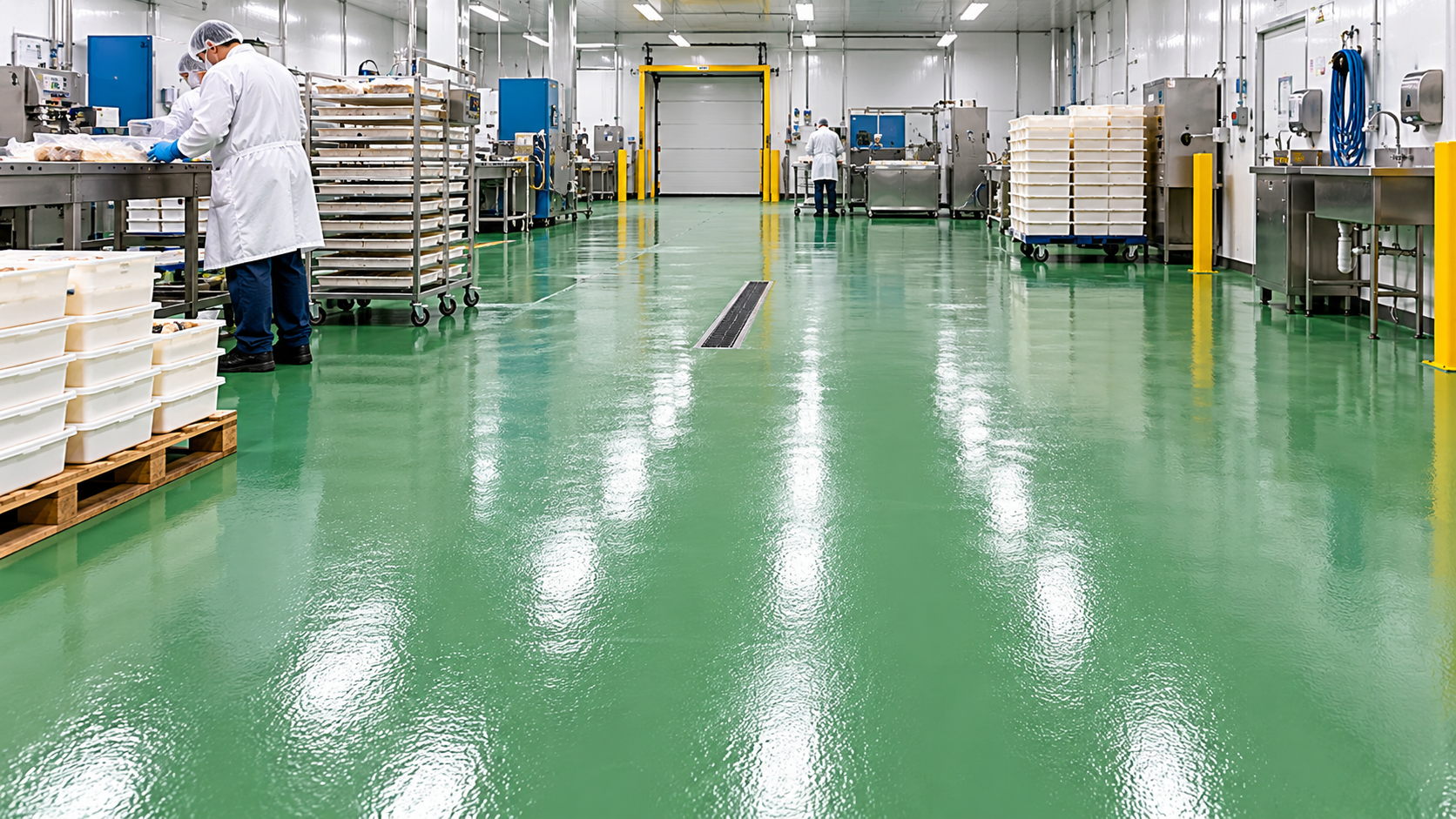

Polished concrete & surface preparation
For suitable slabs, polishing may provide a practical finished surface. Existing concrete may also need repairs, leveling or resurfacing before another flooring system is installed.
Explore polished concrete ↗Industrial flooring in real-world facilities.
See examples of industrial flooring installations and the surfaces used in working facilities. Every project starts with the demands of the space, from equipment traffic and cleaning to the condition of the concrete.
Explore our documented flooring projects for a closer look at completed work.
View flooring success stories ↗
Manufacturing flooring FAQ
What flooring is best for a manufacturing facility?
There is no single best floor for every plant. Equipment traffic, chemical exposure, cleaning methods, slab condition and required downtime should guide the selection of epoxy, urethane, polished concrete or another system.
Can industrial flooring be installed without shutting down the entire facility?
Some projects can be phased around production areas and access routes. Feasibility depends on surface preparation, ventilation, installation conditions and the selected system's cure and return-to-service requirements.
Which floors can handle forklift traffic?
Several properly specified systems may be suitable for forklift traffic. Load type, wheel material, traffic frequency, joints and substrate condition all matter. The finished floor must be evaluated as a complete assembly.
How do you choose a floor for chemical exposure?
Identify the chemicals, concentrations, temperatures, contact times and cleaning procedures. Resistance varies by product, so those details are necessary before selecting a coating or resinous system.
Can a damaged factory floor be resurfaced?
Some worn or damaged concrete can be repaired, leveled or resurfaced. Structural movement, moisture, contamination and severe slab deterioration may require additional evaluation before an appropriate solution can be recommended.
Serving manufacturing and industrial facilities in Massachusetts and throughout New England.