01 / APPEARANCE
Finish, color and visual consistency
Showrooms and customer areas often need a cohesive finish that supports the building's design and brand.

Polished concrete, decorative epoxy and durable resinous flooring for retail stores, showrooms, offices, public buildings and commercial properties across Massachusetts and New England.
Retail stores, commercial showrooms, offices and public-facing buildings need floors that complement the space while standing up to foot traffic, cleaning, deliveries and everyday wear.
New England Floor & Wall helps building owners and facility teams evaluate existing concrete, appearance goals, maintenance needs and installation schedules before selecting polished concrete or a decorative resinous system.
Showrooms and customer areas often need a cohesive finish that supports the building's design and brand.
Traffic volume, entryway grit, deliveries and equipment movement affect surface wear and maintenance.
Wet entrances, spills, cleaning chemicals and required surface texture influence material selection.
Surface preparation, curing, ventilation and phased access should be planned around business operations.
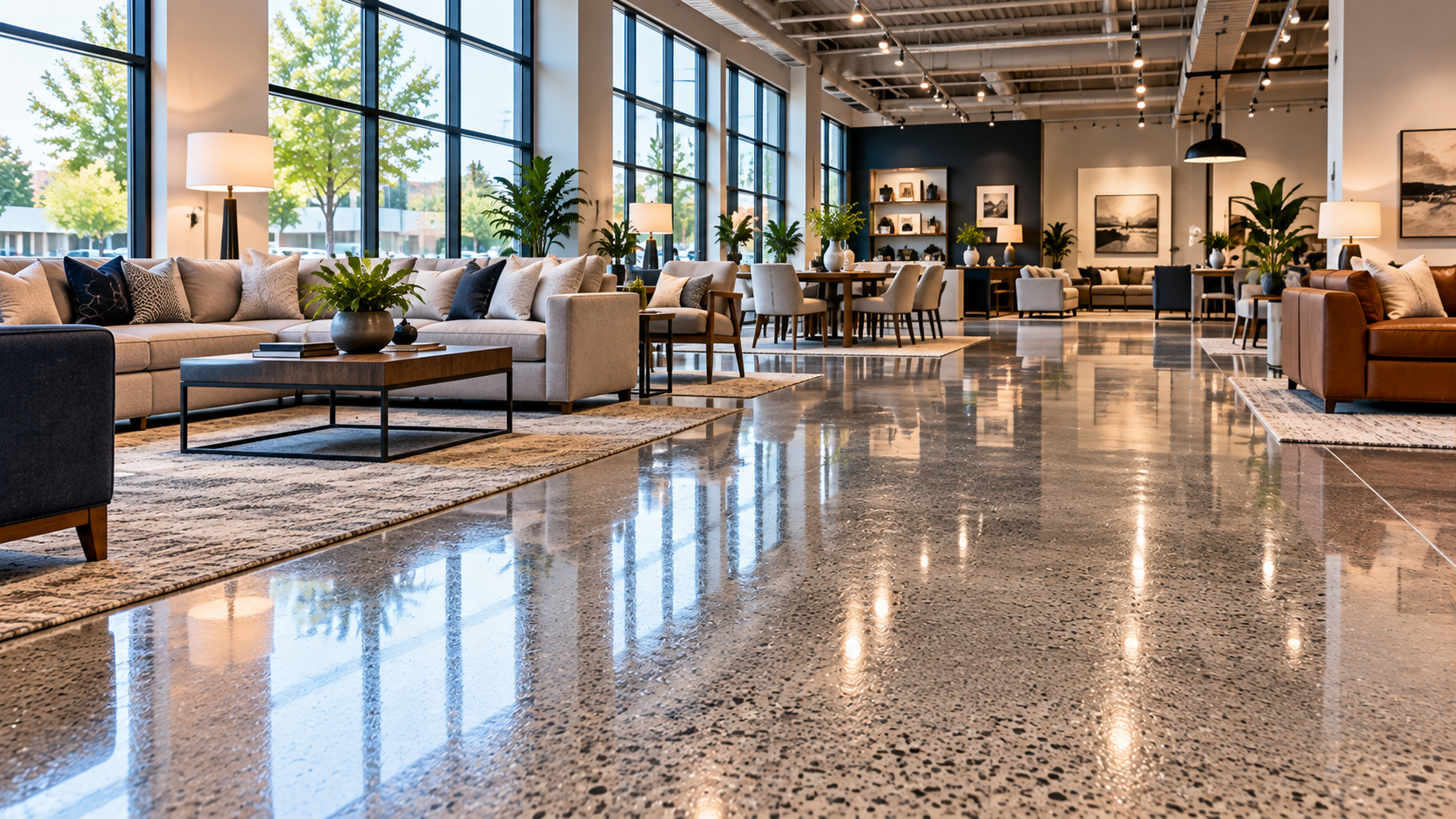
Polished concrete can deliver a refined, contemporary finish while retaining the character of the existing slab. Aggregate exposure, sheen and color variation depend on the concrete's condition and polishing specification.
Explore polished concrete ↗Decorative resinous systems provide color and texture options for retail spaces, corridors, restrooms and commercial interiors. Coating chemistry, aggregate, topcoat and surface profile should be selected for traffic, cleaning and slip-resistance needs.
Explore decorative flake & quartz ↗
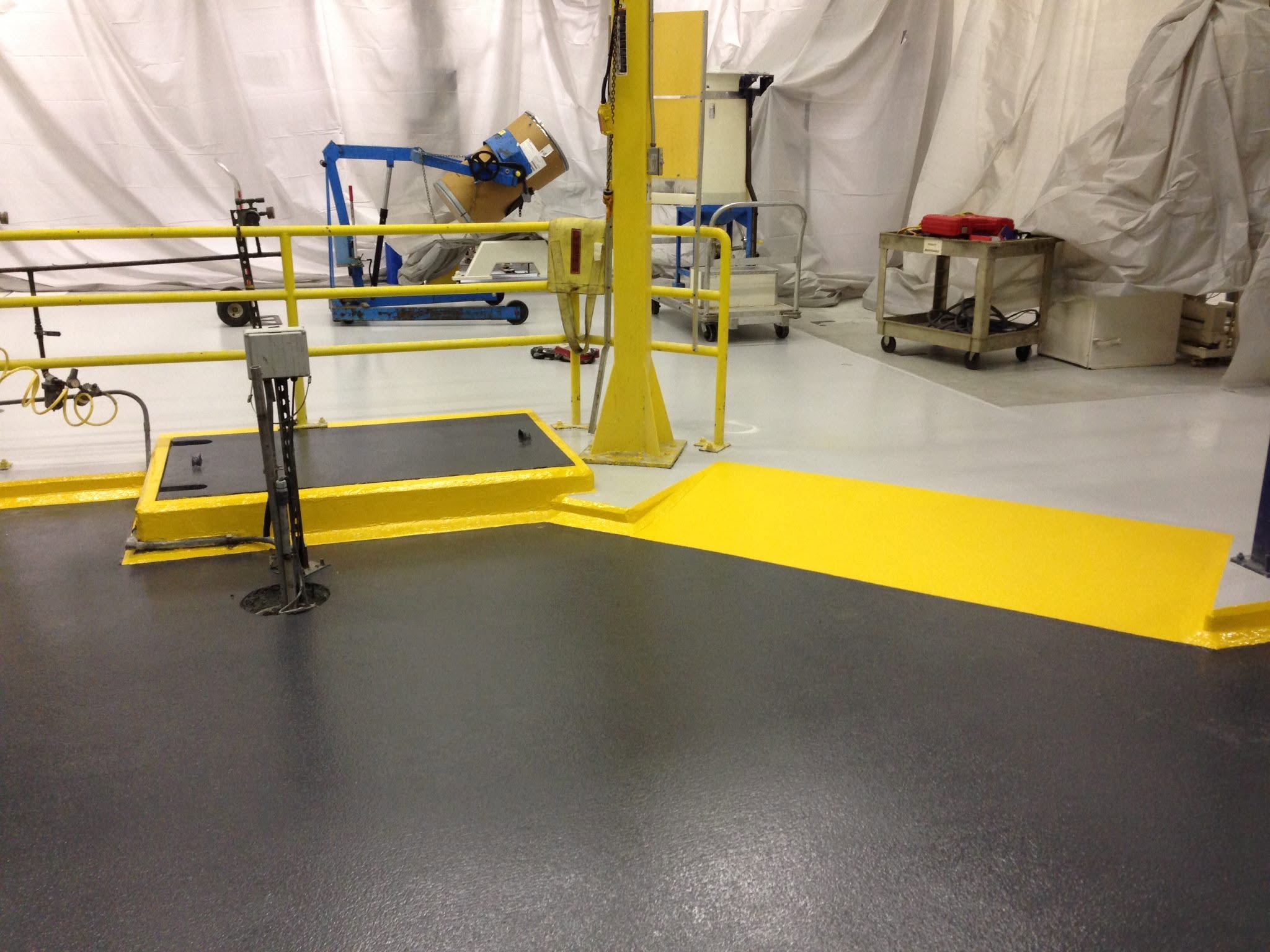
Busy commercial properties may need durable resinous coatings, concrete repair, leveling or overlays before the final finish. Existing moisture, damaged areas, transitions and operational downtime should be evaluated first.
Explore concrete preparation & overlays ↗A retail showroom, public lobby and busy service corridor can call for different flooring decisions. We consider the existing slab, appearance, expected traffic, maintenance and the practical realities of installation.
New England Floor & Wall serves commercial and industrial customers throughout Massachusetts and the New England region.
Explore flooring projects ↗
It depends on customer traffic, desired appearance, cleaning routines and the existing slab. Polished concrete and decorative resinous flooring are options for many retail environments, but suitability should be assessed for each site.
Polished concrete highlights the existing slab and can offer a refined, low-maintenance appearance. Epoxy and other resinous systems provide more color and finish choices and can cover certain surface imperfections after proper preparation. The best choice depends on substrate condition, appearance, traffic and maintenance.
Sometimes. Work may be phased by area or scheduled after hours, but preparation noise, dust containment, ventilation, curing and safe customer access need to be planned before installation.
They can be appropriate for selected entrances, corridors, restrooms and other commercial areas. Aggregate size, topcoat, texture and cleaning requirements should be selected for the specific use.
Traction depends on the finish, contamination, footwear and maintenance. Wet entrances and spill-prone areas require a separate slip-risk assessment; no flooring material should be described as universally slip-proof.
Often, if the slab is suitable. Repairs, cracks, moisture, old adhesive or coatings, and surface flatness must be evaluated before choosing polishing, overlays or resinous coatings.
Compare expected foot traffic, rolling loads, cleaning frequency, moisture, aesthetic goals, budget and acceptable downtime. A site assessment helps determine which system is appropriate.
Flooring suitability, slip resistance, and installation planning depend on project-specific conditions and applicable building requirements.