Floor leveling & concrete overlays for commercial facilities.
Surface preparation, leveling and resurfacing solutions that help address uneven, worn or damaged concrete before the next stage of a flooring project.
A better floor begins beneath the finish.
Existing concrete is not always ready for a new floor. Variations in elevation, localized deterioration, surface contamination or previous repairs may need attention before a coating or other finish can perform as intended.
New England Floor & Wall evaluates the slab and project requirements to determine whether leveling, patching, resurfacing or an overlay system is appropriate.
Solutions for different concrete conditions
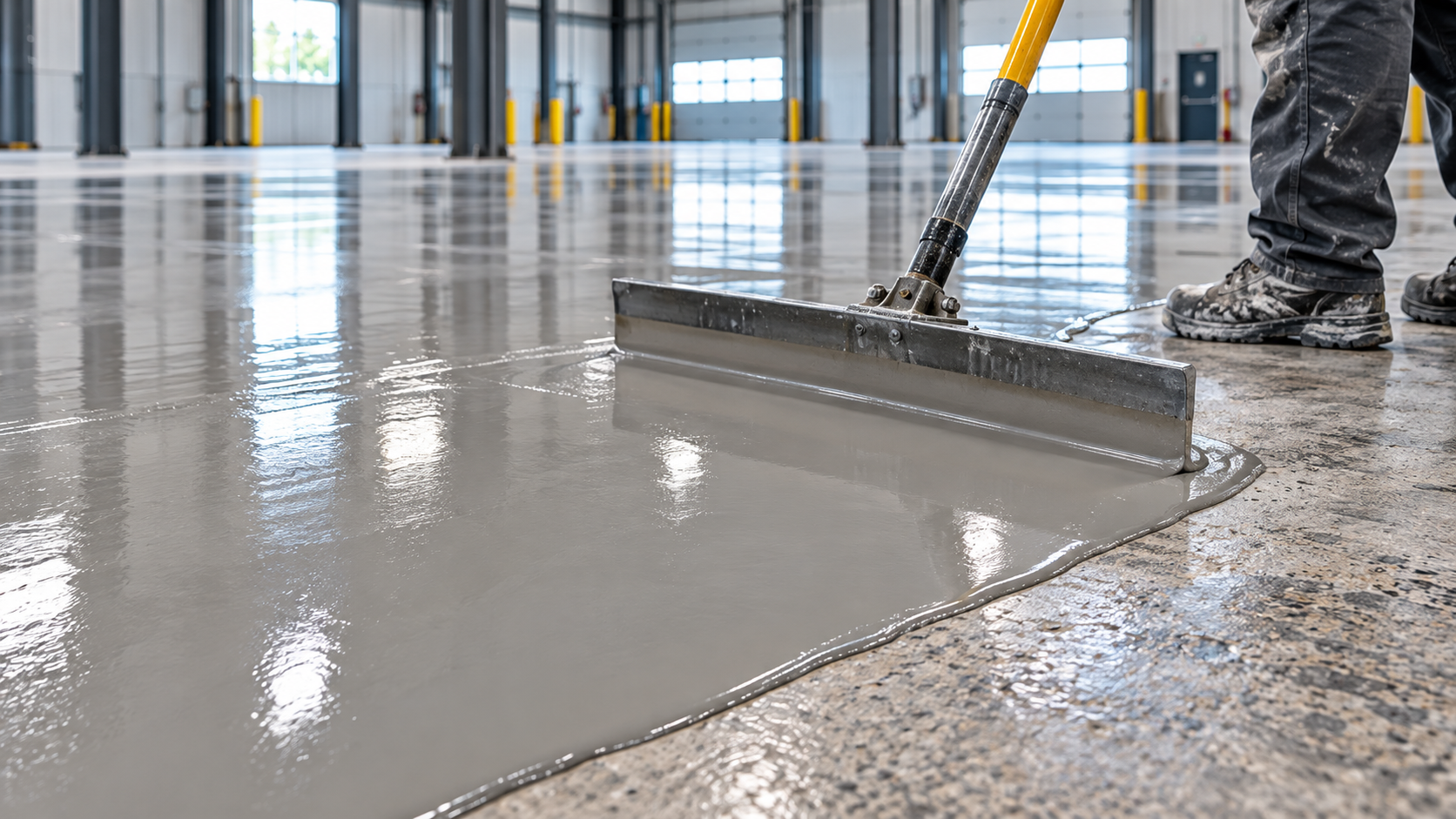
Floor leveling
Leveling materials can help address uneven areas or specified flatness requirements, subject to the slab and product limitations.
Concrete overlays
Resurfacing systems may provide a new working surface over suitably prepared concrete where the existing slab remains serviceable.
Patching & repairs
Localized preparation and repair work can address selected defects before coatings, resinous floors or other finishes are installed.
What should be checked before leveling or resurfacing?
The appropriate solution depends on the cause and extent of the floor problem. Leveling and overlays do not replace an evaluation of structural movement, moisture or underlying slab defects.
Identify the condition
Review uneven areas, surface deterioration, cracks, contamination and previous floor materials.
Match the material
Consider thickness, substrate compatibility, required flatness, traffic and the intended final floor covering.
Plan installation
Account for preparation, environmental conditions, cure time and access before subsequent flooring work.
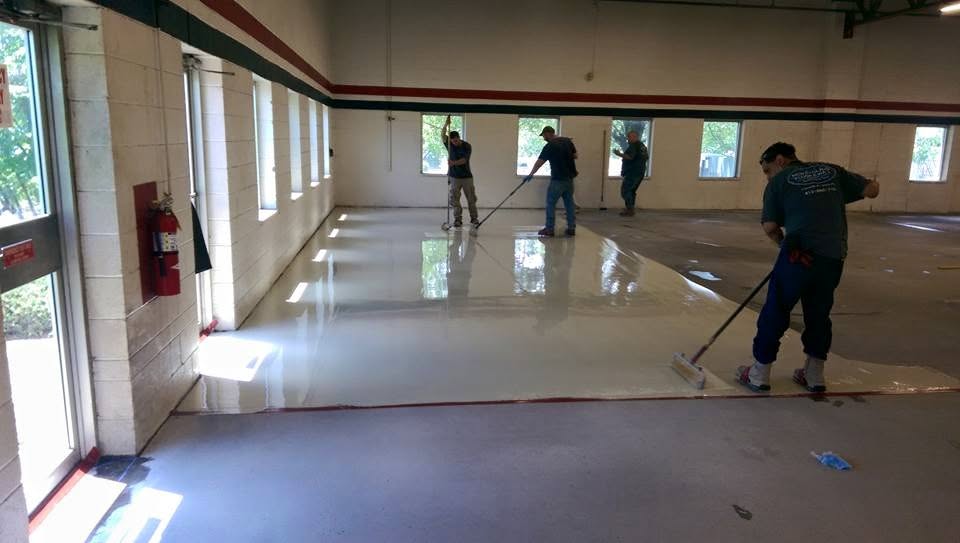
Preparation matters as much as the final finish.
Surface preparation and leveling can be important parts of a larger flooring installation. The goal is to create a suitable substrate for the specified system, whether that involves a resinous floor, another commercial finish or a resurfaced concrete surface.
Material selection should reflect the existing slab, service requirements and the manufacturer's installation criteria.
Explore commercial flooring options ↗Floor leveling & concrete overlay FAQ
What is the difference between floor leveling and a concrete overlay?
Leveling is intended to correct specified unevenness or elevations, while an overlay is a resurfacing layer applied over suitable existing concrete. Some products can serve both functions, but their purpose and specifications differ.
Can you level an existing concrete floor without replacing it?
Often, if the underlying slab is sound and conditions allow. The appropriate approach depends on the extent of unevenness, required thickness, moisture and intended use.
Can a concrete overlay be installed over damaged concrete?
Some surface defects can be repaired before an overlay, but significant movement, structural problems or unsuitable substrates may require a different solution. An assessment is necessary.
How thick can a floor leveling compound be applied?
Permitted thickness varies by product, substrate and application. The system must be selected according to the actual depth required and the manufacturer's instructions.
How long before a leveled or resurfaced floor can be used?
Return-to-service times depend on the product, thickness, temperature, moisture and whether another finish will be installed. Walking, equipment use and subsequent flooring may have different timing requirements.
Commercial and industrial flooring services in Massachusetts and across New England.